

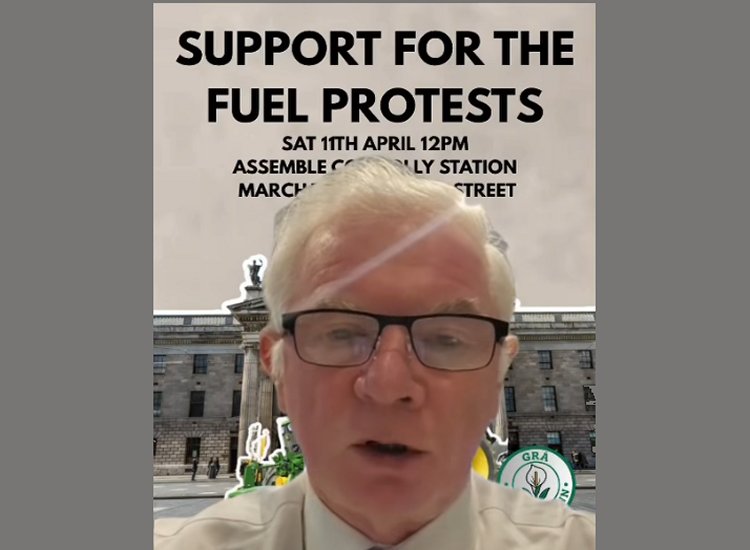
As Ireland grapples with soaring fuel prices, a wave of protests by farmers, truck drivers, bikers, and ordinary citizens has brought parts of the country to a standstill. Now entering its fifth day, the movement shows no signs of slowing. Blockades of major roads, fuel depots, and city centres have led to long queues at petrol stations, disrupted bus services, and growing tensions with authorities. The latest development: Dublin City Councillor Malachy Steenson has issued a direct call for a major protest at midday on Saturday in O’Connell Street, urging people to converge on Dublin or join local actions nationwide.
The protests erupted amid frustration over high diesel and petrol costs, which protesters argue are crippling households, farms, and the transport sector. Many blame a combination of global factors — including ongoing conflicts affecting oil supplies — and domestic policies such as taxes and limited government relief. Hundreds of vehicles, including tractors, trucks, buses, and now motorcycles, have taken to the streets, with some drivers reportedly sleeping in their vehicles overnight to maintain the pressure. Organizers have emphasized that they are “in it for the long run” until their demands are addressed.
A government meeting with representative bodies on Friday ended without a deal, prompting protesters to vow continuation. A follow-up session is slated for Saturday. While the government has signalled openness to further support measures for affected sectors — describing any new package as “substantial and significant” — it has insisted that blockades of critical infrastructure must end first. Ministers have warned of “penalties” for disruptions and even deployed the Defence Forces to help clear roads and protect fuel supplies, framing the actions as potential “national sabotage” in some statements. Gardaí have expressed growing frustration, viewing the blockades as more than legitimate protest.
Councillor Steenson, an independent elected to Dublin City Council in 2024 for the North Inner City, has been vocal in supporting the demonstrators from early on. In his call shared widely on social media, he urged broad participation: “Everyone to go to Dublin or their local fuel protest at midday.” The video accompanying the announcement captures the intensity of the moment, with Steenson addressing crowds and highlighting the cost-of-living pressures at the heart of the unrest. His involvement adds a political layer to the grassroots action, as he positions the protests as a stand against an “out-of-touch” government failing ordinary Irish people.

The demonstrations have drawn a diverse coalition. Farmers and agricultural contractors highlight the impact on food production and rural economies. Hauliers point to squeezed margins that threaten livelihoods. Bikers joining the fray on Friday brought an additional visual and symbolic element to the convoys. Public sentiment appears mixed but energized in many quarters, with some viewing the actions as a necessary wake-up call after years of rising energy costs and broader economic strains. Others, including government figures, worry about emergency services being hampered and everyday commuters bearing the brunt.
Fuel costs in Ireland have climbed sharply, exacerbated by international volatility and domestic levies. Protesters argue that targeted relief — such as reductions in excise duties or direct supports — could provide immediate breathing room, and some claim the government has the tools to cut prices significantly but lacks the will. The blockades have created real shortages at stations across the country, turning a policy grievance into a visible crisis.
The government’s response has hardened over the days. Initial engagement through established farming and transport organizations gave way to stronger rhetoric, with calls for protesters to “step back from the brink” and accusations of manipulation by external actors. Yet organizers maintain they have a clear “list of demands” and remain committed. One protester representative stated on national television that the movement is not intimidated by the involvement of the army, signaling resolve for a prolonged standoff if needed.
Steenson’s call for a mass gathering in O’Connell Street — a historic and symbolic location for Irish public expression — could mark a significant escalation. It aims to broaden the protest beyond those already on the roads, bringing families, workers, and concerned citizens into the fold. Whether it draws thousands or remains more contained will depend on turnout and the evolving situation overnight.
As Ireland faces this moment of tension, the fuel protests encapsulate deeper frustrations: the cost of living, the squeeze on working people and rural communities, and questions about how government balances economic pressures with public order. Supporters see ordinary citizens exercising their right to protest against policies that hit hardest at home. Critics argue that blockading infrastructure risks harming the very people the movement claims to champion.
The coming hours and Saturday’s events in Dublin will likely determine whether dialogue yields meaningful concessions or if the standoff intensifies further. For now, the tractors, trucks, and bikers remain in place — and the call has gone out for more voices to join them. Things are indeed escalating fast.
Tell us your thoughts in the Facebook post and share this with your friends.

