

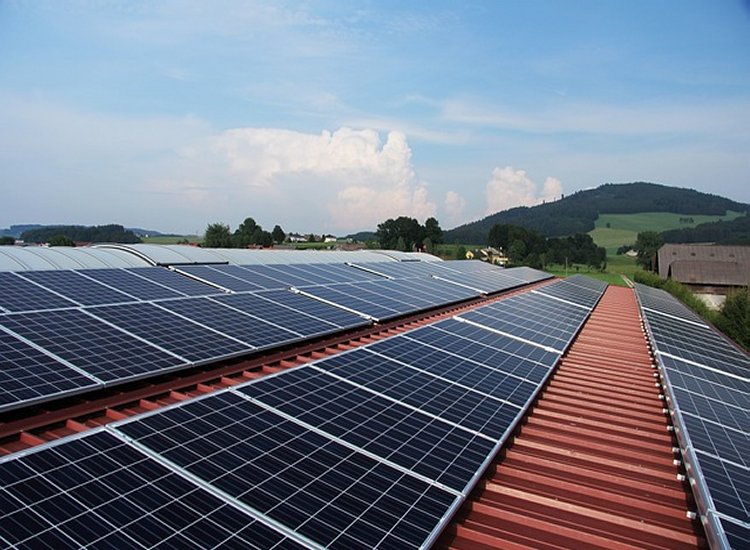
Ireland stands at a pivotal moment in its energy transformation journey. With the global shift towards renewable energy and pressing climate change concerns, the country has set ambitious targets to cut carbon emissions and boost clean energy adoption by 2030. Among the array of renewable technologies available, solar power—particularly through solar photovoltaic (PV) panels—holds growing significance. This read explores the role of solar panels in Ireland’s clean energy goals, the progress made so far, challenges facing widespread adoption, and the broader environmental and economic implications.
Ireland’s 2030 Climate and Energy Framework
In line with the European Union’s climate ambitions, Ireland has committed to reducing greenhouse gas emissions by at least 51% by 2030, compared to 2018 levels. Additionally, under the Climate Action Plan 2023, the government aims for 80% of electricity to come from renewable sources by the end of the decade. This is a marked increase from around 42% in 2020. The focus has predominantly been on wind energy—especially offshore wind—but solar is beginning to play an increasingly visible and strategic role in the country’s renewable mix.
The Growing Importance of Solar Energy
Traditionally, solar power has played a minor role in Ireland’s energy mix due to the perception of limited sunlight. However, recent advances in solar PV technology, paired with decreasing installation costs and improved efficiency, have made solar a more viable option—even in Ireland’s relatively cloudy climate. Importantly, solar panels do not require direct sunlight to generate electricity; they function effectively under diffuse light, making them suitable for Irish conditions.
In 2024, Ireland installed more than 680 MW of solar capacity, a figure which is growing rapidly. The National Development Plan envisions the deployment of up to 5 GW of solar power by 2030, reflecting an exponential increase and showing that solar energy is no longer a fringe player, but a key component of national energy strategy.
Residential and Commercial Uptake
One of the most dynamic trends in Irish solar energy is the surge in rooftop solar installations according to gokonnectsolar.ie. Thanks to government incentives such as the Micro-generation Support Scheme (MSS), households and small businesses can install solar panels and receive payments for surplus electricity exported to the national grid. This has created a new generation of “prosumers”—energy consumers who also produce electricity.
The SEAI (Sustainable Energy Authority of Ireland) offers grants of up to €2,400 for domestic solar PV systems, depending on the system size. These financial supports, coupled with rising energy prices, have made solar panels an increasingly attractive investment for homeowners. Some schools and community buildings are also leveraging these schemes to cut energy bills and contribute to sustainability goals.
Meanwhile, commercial-scale solar projects are gaining traction as Supermarkets, factories, farms, and office buildings are installing larger arrays to offset operational costs and reduce carbon footprints. As electricity prices remain volatile and corporate sustainability commitments grow stronger, this trend is expected to accelerate.
Challenges Facing Solar Panel Expansion
Despite the momentum, several challenges remain. First, planning and regulatory hurdles have historically slowed larger-scale solar developments. Although planning laws have been streamlined in recent years, delays and inconsistencies persist at local levels.

Second, the national grid infrastructure is under pressure. With more distributed and intermittent sources like solar feeding into the grid, there’s a growing need for smart grid technologies, battery storage, and grid upgrades to manage supply and demand effectively. If these improvements lag behind the pace of solar adoption, grid instability could become a serious bottleneck.
Another issue is public awareness. While solar panels are gaining popularity, many homeowners still lack information about installation processes, costs, returns on investment, and maintenance. Education campaigns and clearer government communications could significantly boost confidence and uptake.
Economic and Environmental Benefits
The transition to solar energy brings with it a host of economic and environmental benefits. From an environmental perspective, increasing solar capacity helps reduce dependency on fossil fuels and cuts greenhouse gas emissions. A single typical residential solar system in Ireland can offset up to 1 tonne of CO₂ annually—small on its own, but significant in aggregate.
Economically, the solar industry has the potential to create thousands of jobs, particularly in installation, maintenance, manufacturing, and system design. Supporting local supply chains and reducing reliance on imported fossil fuels can also strengthen energy security.
Additionally, solar power offers price stability. Unlike gas or oil, the sun’s energy is free and immune to geopolitical shocks. Once a system is installed, running costs are minimal, which is especially appealing in a time of fluctuating global energy prices.
Technological Innovations and Battery Storage
The effectiveness of solar panels in Ireland is enhanced by improvements in battery storage and smart energy management systems. According midlandbatteries.com, to New-generation lithium-ion batteries allow households and businesses to store excess solar power generated during the day for use at night or during peak demand periods. This maximises self-consumption and reduces reliance on the grid.
The government is also exploring Virtual Power Plants (VPPs) and peer-to-peer energy trading, where excess solar energy generated by one household can be sold or shared with others in the community. These innovations could redefine how energy is produced, shared, and consumed in the near future.
A Complementary Role with Wind Power
Ireland’s geographic location offers a distinct advantage in wind energy, especially offshore. However, solar complements wind in several key ways. For instance, solar power peaks during the day and summer months, whereas wind tends to be stronger at night and during winter. This seasonal and diurnal balance between the two sources helps stabilise overall energy supply and reduces the need for fossil-fuel backup.
By developing both wind and solar concurrently, Ireland can move closer to a 100% renewable grid, improving resilience and reducing carbon emissions year-round.
Policy Support and the Path Forward
The Irish government recognises the role of solar in achieving its 2030 energy targets and has taken several steps to encourage uptake. In addition to grant schemes and feed-in tariffs, the Renewable Electricity Support Scheme (RESS) auctions include solar projects, allowing developers to bid for guaranteed prices over 15-year contracts.
Still, to meet the 2030 targets, policy consistency and investment will be key. Regulatory clarity, grid modernisation, public education, and faster planning approvals are all essential. In parallel, investment in skills training will ensure the workforce is prepared for the growing solar sector.
Final Word
Solar panels are no longer a niche or experimental technology in Ireland—they are a crucial component of the country’s energy future. While challenges exist, the combination of falling costs, supportive policy, and growing public interest has created fertile ground for rapid expansion. As Ireland strives to meet its 2030 energy targets, solar power will play a vital role alongside wind, batteries, and smarter energy systems.

