

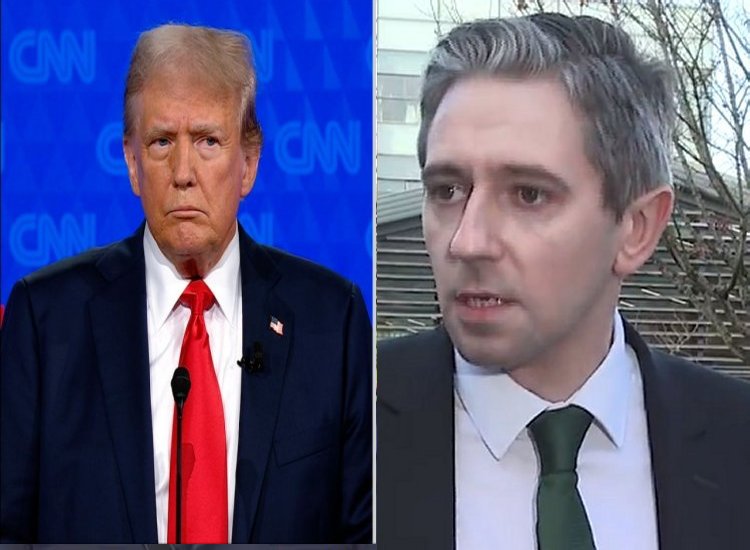
President Donald J. Trump announced a 90-day pause on most of his administration’s recently imposed tariffs, a move that has reverberated across global markets and prompted a swift response from the European Union. While Trump escalated tariffs on China to a staggering 125%, he lowered the baseline “reciprocal tariff” to 10% for most other trading partners and paused higher country-specific duties, offering a temporary reprieve to nations like those in the EU. In response, the EU, which had just approved its own retaliatory tariffs on April 9, has now opted to suspend these measures for 90 days, aligning with Trump’s timeline and signaling a potential de-escalation in the transatlantic trade war.
Just hours before Trump’s announcement, the EU’s 27 member states had greenlit a package of retaliatory tariffs targeting €21 billion ($22.9 billion) worth of U.S. goods. This was a direct response to Trump’s earlier imposition of 25% tariffs on EU steel and aluminum, as well as the broader 20% “reciprocal tariff” on all EU exports that took effect on April 9. The EU’s countermeasures, set to roll out in three phases starting April 15, included 25% duties on a range of American products—almonds, soybeans, poultry, tobacco, motorcycles, and yachts—strategically chosen to pressure Republican-leaning states like Louisiana and Kansas. European Commission President Ursula von der Leyen had framed these tariffs as a necessary defense against “unjustified and damaging” U.S. policies, while emphasizing a preference for negotiation over confrontation.
However, Trump’s unexpected pivot later that day—pausing the higher tariffs for most countries except China—shifted the calculus. The EU, caught mid-stride in its retaliation, faced a choice: proceed with its duties and risk escalation, or pause and seize the opportunity for dialogue.
On April 10, von der Leyen welcomed Trump’s decision as “an important step towards stabilizing the global economy,” underscoring the need for “clear, predictable conditions” in trade. Crucially, she announced that the EU would hold off on implementing its retaliatory tariffs for 90 days, mirroring Trump’s timeline. “We want to give negotiations a chance,” she stated, noting that the EU’s countermeasures—finalized but not yet enacted—would remain on standby. If talks with the U.S. fail to yield a “satisfactory” outcome, von der Leyen warned, “our countermeasures will kick in.”
This pause reflects a pragmatic shift in Brussels. The EU had been poised to escalate, with plans to target U.S. exports worth up to €26 billion ($28.4 billion) in its initial drafts, and discussions underway for broader measures against U.S. cars and pharmaceuticals. Yet Trump’s olive branch—or at least his temporary retreat—offered a window to avoid a full-blown trade war. European shares surged on the news, with markets in London, Frankfurt, and Paris rebounding from earlier losses, a sign of relief that an all-out tariff battle might be averted.

Several factors likely influenced the EU’s decision to pause. First, Trump’s pause reduced the immediate threat: the 20% tariff on EU goods dropped to 10% for the next 90 days, and the higher country-specific duties (up to 50% for some nations) were shelved. This softened the economic blow to European exporters, who faced a potential €80 billion ($87 billion) hit annually from the original plan. Second, the EU’s own retaliation risked backfiring. Targeting U.S. goods like soybeans and bourbon could have invited counter-countermeasures—Trump had already threatened 200% tariffs on EU alcohol if bourbon were hit—potentially devastating industries in France, Italy, and Ireland.
Moreover, the EU’s trade strategy hinges on unity and leverage, both of which could erode in a prolonged tit-for-tat. Hungary’s lone dissent in the April 9 vote signaled cracks in the bloc’s resolve, and further escalation might have strained cohesion among member states with varying economic ties to the U.S. By pausing, the EU preserves its bargaining power, keeping its tariff threat alive while testing Trump’s willingness to negotiate.
The synchronized 90-day pauses set the stage for intense diplomacy. The EU has long pushed for a “zero-for-zero” deal—eliminating tariffs on industrial goods like cars and machinery—a proposal Trump rejected earlier but which could resurface. Posts on X suggest optimism in some quarters, with users noting that over 50 countries, including EU members, are signaling openness to tariff reductions. Treasury Secretary Scott Bessent’s claim that 75 nations have approached the White House for talks aligns with this sentiment, hinting at a broader realignment of global trade dynamics.
For the EU, the pause is a chance to recalibrate. Commission spokesman Olof Gill emphasized that the bloc would “assess this latest development” with member states and industry, hinting at flexibility but also preparedness. The EU’s next moves could extend beyond tariffs on goods—options like targeting U.S. tech giants (e.g., Apple, Google) or restricting access to public contracts remain on the table, leveraging the bloc’s €109 billion ($119 billion) services trade surplus with the U.S.
The EU’s pause is a calculated gamble. If negotiations falter, the bloc could activate its tariffs in July, reigniting tensions. Trump’s focus on China—where tariffs jumped from 104% to 125%—suggests he’s prioritizing that rivalry, potentially giving the EU room to maneuver. However, his unpredictable style keeps uncertainty high; he’s already mused about severing trade ties entirely if the EU pushes back too hard.
For now, both sides have stepped back from the brink. The EU’s decision to pause mirrors Trump’s, creating a rare moment of transatlantic alignment amid months of trade saber-rattling. Whether this truce holds—or collapses into a renewed tariff war—depends on the talks ahead. As von der Leyen put it, “Europe holds a lot of cards.” The next 90 days will reveal how she plays them.
Tell us your thoughts in the Facebook post and share this with your friends.
