

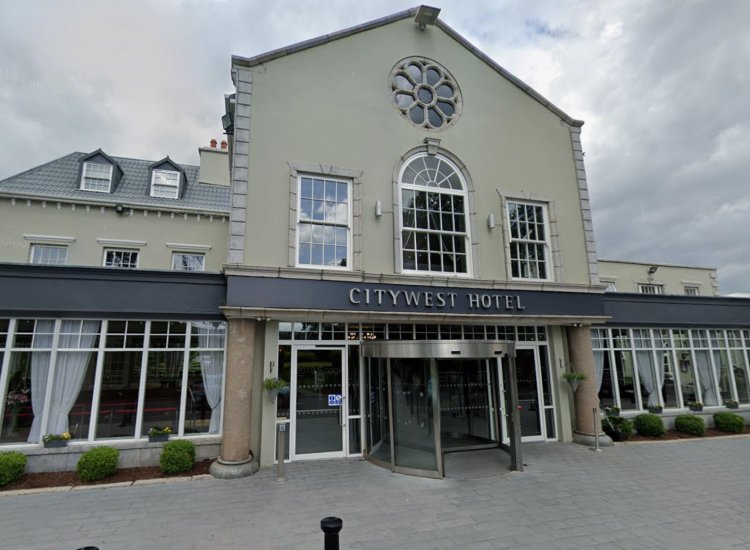
EU Migration Commissioner Magnus Brunner has said Ireland is in a “very strong” position to implement the Migration and Asylum Pact, describing the Citywest accommodation centre for International Protection applicants as an example of “best practice”.
He made the remarks in Dublin after touring Citywest and holding meetings with senior gardaí and the head of the Criminal Assets Bureau, as well as speaking with Minister for Justice Jim O’Callaghan, reports RTE.
The Migration and Asylum Pact, which comes into effect this June, aims to establish a more unified EU approach to asylum, migration and border procedures, including quicker screening, mandatory health and security checks, and a more efficient returns system.
Mr Brunner said he believes the new laws will lead to fewer people entering the EU, reports RTE.
Minister O’Callaghan dismissed a claim by Sinn Féin that the Government should have pursued a bilateral agreement with the UK regarding the movement of asylum applicants within the Common Travel Area rather than signing up to the pact.
The party’s justice spokesperson Matt Carthy argued that the pact is not in Ireland’s best interests, saying it does not “take into account Ireland’s unique position as both a member of the EU and part of a Common Travel Area”, reports RTE.
Minister O’Callaghan, however, said he remains in close and ongoing contact with his UK counterpart and that the Government will consider any developments introduced at Westminster.
Mr Brunner described this type of “migration diplomacy” as useful, adding that the UK appears to be aligning its legislation with practices already used in many EU Member States, reports RTE.
Minister O’Callaghan also mentioned that the 60,000 visas issued each year to people studying English in Ireland as a foreign language is an area under review by his department.
He added that he has discussed the topic with Minister for Further and Higher Education James Lawless, reports RTE.
“Obviously we’re trying to reduce immigration… or slow down the population growth. One area where we control is where we provide visas for people to come in,” he said, reports RTE.
“I think we hand out approximately 60,000 or so student permissions each year. So it is an area we’re looking at, particularly in respect of English language schools,” reports RTE.

“No decisions have been made yet but there is ongoing engagement between myself and Minister Lawless, and indeed across Government,” reports RTE.
The Minister said that any changes in this area would not be happening immediately and would take time to develop.
“I’m not bringing forward any proposals this week or in the immediate future,” he said, reports RTE.
Speaking separately to RTÉ’s Six One News, he said that while he hopes to accelerate the family reunification process, this must be balanced with the interests of Irish citizens, reports RTE.
“We’ve a limit in terms of the number of people who could come in under family reunification. As we know our population is increasing, approximately seven times the EU average,” he said, reports RTE.
“Our population is increasing very significantly and we just need to balance our immigration with ensuring that we treat people very fairly but that at the same time we try to keep some level of control on our population,” reports RTE.
The pact outlines significant changes to how the EU screens and registers asylum seekers, prioritising faster processing of new arrivals and creating a new solidarity mechanism.
This mechanism involves member states supporting frontline countries such as Greece or Italy during migration surges through what is known as the “Solidarity Pool”, reports RTE.
Justice ministers from EU member states, including Minister O’Callaghan, are set to meet in Brussels on 8 December to continue negotiations on how responsibilities may be shared.
Under the plan, member states will be allowed to either take in additional asylum seekers to alleviate pressure on frontline states or provide financial contributions instead, reports RTE.
An Oireachtas parliamentary research note states that Ireland’s yearly obligation will involve accepting 648 relocations during an emergency or contributing €12.96m annually, or using a combination of both.
Ireland has opted into all but two sections of the Migration Pact and remains exempt from the entry/exit system that records the movement of third-country nationals entering and leaving the Schengen zone, reports RTE.
In a report dated 11 November, the European Commission acknowledged “pressures on Ireland’s reception system – including increased arrivals via the Northern Irish border and significant numbers of Ukrainians,” recommending that Ireland receive priority assistance from EU agencies and funding, reports RTE.
Officials believe a recent returns agreement between the UK and France, aimed at reducing small boat crossings in the Channel, should limit the number of migrants subsequently travelling south via Northern Ireland.
Separately, EU member states are working on a returns regulation that may result in rejected asylum applicants being transferred to designated returns hubs in third countries considered safe, reports RTE.
Tell us your thoughts in the Facebook post and share this with your friends.

