

A Government minister has emphasised that Ireland’s commitment to aiding the reconstruction of Gaza will not come at the cost of other domestic or international programmes.
He said that “at a time like this it’s even more important for a small country like Ireland to stand up and say ‘this is the right thing to do’”, reports Breaking News.
Ireland has already pledged €6 million in humanitarian support to Gaza this week, and Tánaiste and Minister for Foreign Affairs Simon Harris informed Cabinet of plans to allocate further funds to Gaza’s rebuilding efforts in light of the recent peace agreement.
This has prompted concerns about whether existing aid or domestic programmes would be affected by reallocated funding, reports Breaking News.
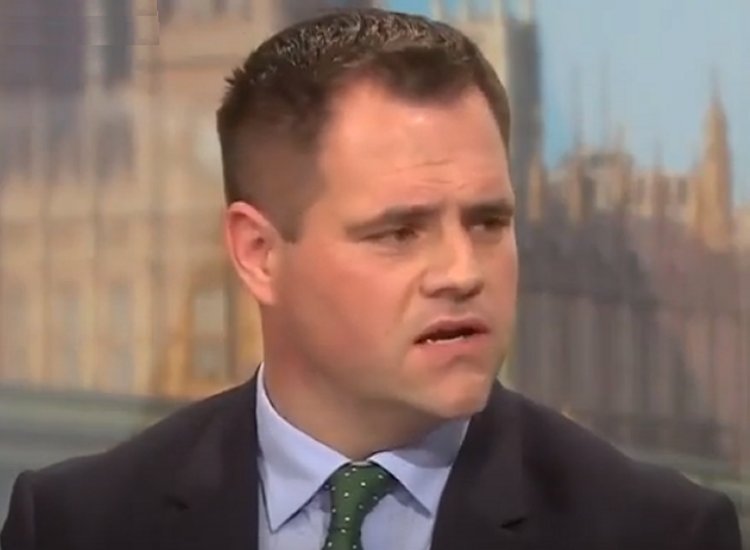
In an interview with BreakingNews.ie, Minister of State for International Development and Diaspora Neale Richmond said, “it won’t be at the expense of other programmes”.
“We’re very lucky that we have flexibility with our humanitarian assistance. We have our standard commitment to the UN agencies every year, these ones are most active in Gaza, UNWRA originally but more the World Health Organisation and the World Food Programme at the moment, and we’ve been able to increase our funding to them,” reports Breaking News.
“One of the things we’ve really done is paid our bills early. Some countries are not paying these bills, a lot of these bills were due in May but we were able to pay them in February.
“We always have to respond to humanitarian disasters in the world. We responded with great numbers to the humanitarian disasters in Myanmar, Pakistan, Afghanistan, Syria to an extent, so this is what we’re able to put into Gaza,” reports Breaking News.
“Palestine is already included in Irish aid programmes so there is a lot of long-term projects we are consistently investing in in the West Bank and Ramallah. More of that will come, we will absolutely be able to find more funds but it’s not a case of diversion, it’s repackaging and reimagining new sources of income for it.”
Speaking at Leinster House, the Fine Gael TD pointed out that the Official Development Assistance (ODA) fund has increased by €30 million.
He said that increase would help support efforts in Gaza and elsewhere without affecting other key spending areas, reports Breaking News.
He also confirmed that aid to Ukraine remains funded separately from this budget.
Referring to the US-brokered peace agreement that preceded the aid plans, Mr Richmond acknowledged that while fragile, it opens the door for greater humanitarian focus,
He said he expects humanitarian relief to dominate the first “six to eight months” before development initiatives begin to take hold in Gaza, reports Breaking News.
“Shelter, hospitals and schools are urgently needed. The damage that has been done by the sheer lack of humanitarian aid getting into Gaza for so long,” reports Breaking News.
“We had 60 odd days of no aid, just a trickle for a number of weeks, we need hundreds of trucks going in and for the last few weeks it has been an average of 91 a day,” reports Breaking News.
“That goes to show there is a massive humanitarian shortfall, there is famine and people need rapid nutrition packs now, they need hydration tablets, they are dealing with emaciated children. This will take a long time to provide the shelter, nutrition and medical assistance needed,” reports Breaking News.
When asked about critics who question overseas spending amid domestic challenges in housing and healthcare, Mr Richmond responded, “Firstly, they’re perfectly entitled to air their views. These are questions not only that should be asked, but those of us who believe in international aid should be able to answer.”
“We’re spending more on housing, health and education in this country than ever before. We have a really strong economy, it’s not that we’re not spending money here or choosing to spend money abroad rather than at home,” reports Breaking News.
“If we were cutting spending here to drastic levels, I’d take it up, but there are record amounts of money being spent on housing. Money isn’t the issue in terms of the housing emergency, it’s delivery and delivery in rapid form,” reports Breaking News.
“When it comes to international development, firstly, it’s the right thing to do. It’s not charity though. We are a wealthy country, but we are also a country that has experienced famine, civil conflict, and very severe economic hardships,” reports Breaking News.

“We know a lot of challenges the developing world face, I would argue we were a developing economy until we joined the EEC [European Economic Community]. There are selfless reasons, but also selfish reasons to international development. I believe international development is also an investment. Look at all the big issues our communities face; inflation, food prices, energy prices and security, irregular migration,” reports Breaking News.
He said mass migration, especially unregulated movement, was a key issue facing countries in 2024, and foreign aid is a way of tackling root causes of such pressures.
He also pointed to concerns over political extremism and terrorism, which he linked to instability in the developing world, reports Breaking News.
“Where is the genesis in all these issues? It’s instability in the developing world. Think of people who are on the move from countries like Afghanistan, Syria, south Sudan, Sudan, Eritrea, Somalia. Poverty, inequality, the real impacts of the climate emergency, that is impacting directly on these people, it impacts the developing world far more than it does us here. How are we going to address these issues so they don’t impact our country? Are we going to build bigger walls? Or tackle it at source?” reports Breaking News.
“International aid means they can live well in their countries and contribute, rather than just ekeing survival out,” reports Breaking News.
He cited Kenya and Tanzania as examples of nations that have benefited from long-term aid and gone on to form valuable trade partnerships with Ireland.
“We imported €28 million worth of tea from Kenya last year, we exported €16 million worth of cranes from Co Kerry to Tanzania last year. That’s an economic partnership, these are countries who have moved from being development partners to partners who are still developing but we have a very strong economic relationship,” reports Breaking News.
Mr Richmond criticised the United States and some European nations for cutting back on foreign aid, attributing those decisions to rising far-right political influences.
He said this makes it even more crucial for countries like Ireland to uphold their commitment to international development, reports Breaking News.
“Development works, 10 per cent of the world is hungry, but it was 50 per cent not long ago. The rates of HIV/Aids, malaria and polio are down.”
“One sad thing we are starting to see is that when you stop investing in international development these things creep back up. The decision of the Americans, and some European countries, to cut their aid has seen the rates of these disease plateau and rise, polio is back,” reports Breaking News.
“Look at the countries that are cutting their aid and why they are cutting it, there is a political agenda in the US, Sweden, there was in the Netherlands and Finland with far-right elements with the Freedom Party in the Netherlands, Finland with the Finns Party. That level of MAGA Trump tea party republicanism in the US. Oddly, George W Bush was one of the biggest champions of USAID when he was president because he saw it was an investment,” reports Breaking News.
He continued, “The point I’d make is those countries have chosen to cut aid under a false political agenda. Other countries are making it a binary choice between aid and security, we’ve increased our security budget too, Fortunately we’re in a good financial position, Norway has increased both budgets as have Denmark. When you’re increasing in defence and security you need to increase in development too,” reports Breaking News.
He also confirmed that he has raised the issue with British and Belgian officials, many of whom he said do not personally support the idea of cutting foreign aid budgets.
Mr Richmond concluded by saying that next year’s budget will see Ireland commit its highest ever amount to global development – the most significant level of support since then-minister for foreign affairs Garret FitzGerald declared international aid “one of the basic objectives of Irish policy” in 1974, reports Breaking News.
“Solidarity is just a word if we only say it in the chamber. Our Government has sought to do practical things with the situation in the Middle East, we haven’t drafted legislation that doesn’t land. When all other EU member states stopped funding UNRWA we said no and increased our funding by €20 million. We know UN agencies matter. When it comes to Gaza, Ireland, Spain and Slovenia have really led at an EU level. Now that we have the opportunity to spend development money in a, hopefully lasting, peaceful situation we need to increase it and make sure the EU steps up to the plate on this. It has been inconsistent because the EU is 27 member states all with different foreign policies. The EU can do more. We have given over €14 million in aid to Sudan, we back up our words with action,” reports Breaking News.
Tell us your thoughts in the Facebook post and share this with your friends.

