

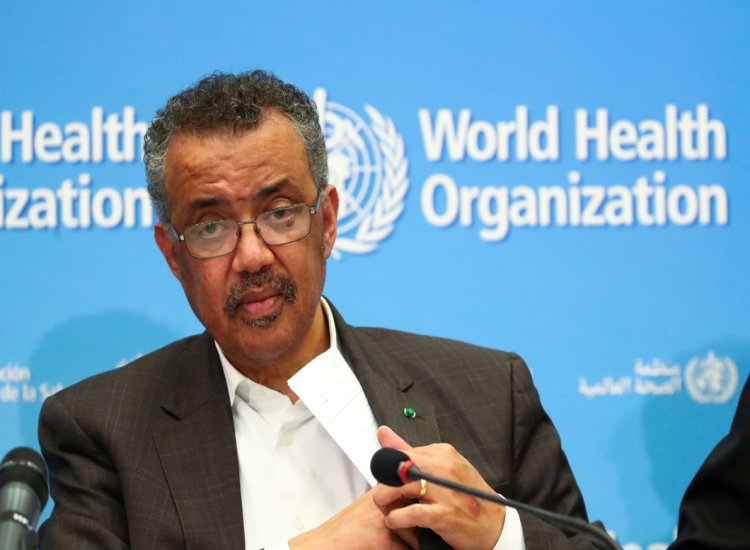
Members of the World Health Organization have agreed on a treaty aimed at improving global readiness for future pandemics, following the fragmented international reaction to Covid-19. However, the absence of US participation has raised questions about the pact’s overall strength, reports RTE.
The legally binding agreement was adopted by the World Health Assembly in Geneva after three years of discussions. Member states applauded as the deal was finalised.
Seen as a success for the global health agency, the agreement arrives at a time when bodies like the WHO have faced major funding cuts, particularly from the US, reports RTE.
“The agreement is a victory for public health, science and multilateral action. It will ensure we, collectively, can better protect the world from future pandemic threats,” said WHO Director-General Tedros Adhanom Ghebreyesus, reports RTE.
Under the pact, treatments, vaccines, and medicines would be made widely available across the globe during future pandemics.
It includes a requirement that producers allocate 20% of their pandemic-related supplies—vaccines, drugs, and diagnostics—to the WHO, so poorer countries are not left behind.
However, US delegates exited talks after President Donald Trump initiated the process to pull the US—historically the WHO’s top donor—out of the agency when he took office in January, reports RTE.
As a result, the US, which invested heavily in vaccine development during the Covid crisis, is not obligated to follow the terms of the agreement. There are also no penalties for WHO members who fail to comply with the pact.

US Health and Human Services Secretary Robert F Kennedy Jr criticised the WHO, calling it “moribund,” reports RTE.
“I urge the world’s health ministers and the WHO to take our withdrawal from the organisation as a wake-up call,” he said in a video recorded on Fox News. We’ve already been in contact with like-minded countries and we encourage others to consider joining us,” he said, reports RTE.
The agreement passed after Slovakia called for a vote, pushed by its prime minister who is sceptical of Covid-19 vaccines and opposed the pact’s approval.
A total of 124 countries voted in favour. None voted against, while 11—including Poland, Israel, Italy, Russia, Slovakia and Iran—chose to abstain, reports RTE.
Some public health advocates supported the treaty, saying it promotes fairness, particularly after low-income countries struggled to access Covid-era resources.
“It contains critical provisions, especially in research and development, that – if implemented – could shift the global pandemic response toward greater equity,” Michelle Childs, Policy Advocacy Director at Drugs for Neglected Diseases initiative said, reports RTE.
Other analysts noted the treaty does not live up to its original aspirations and could fall short if not properly enforced.
“It is an empty shell…It’s difficult to say that it’s a treaty with firm obligation where there is a strong commitment…It’s a good starting point. But it will have to be developed,” said Gian Luca Burci, an academic adviser at the Global Health Centre at the Geneva Graduate Institute, an independent research and education organisation, reports RTE.
The pact will not be implemented until an annex regarding the sharing of pathogen-related data is completed.
The WHO said talks on this annex will begin in July, with the aim of presenting it to the World Health Assembly for approval.
A Western diplomatic official indicated it could take up to two years to finalise that component, reports RTE.
Tell us your thoughts in the Facebook post and share this with your friends.

