
A street artist from Bristol in the United Kingdom has been identified as the famous graffiti creator Banksy following an extensive investigation conducted by the news agency Reuters, reports RTE.
Robin Gunningham, who was born in the southwestern English city in 1973, was confirmed by the agency to be the individual who has managed to avoid being publicly identified for many years. Mr Gunningham later adopted the name David Jones, reports RTE.
The probe centres on artworks in Ukraine that Banksy confirmed on Instagram as his own in 2022.
Toward the end of 2022, an ambulance arrived at a bomb-damaged apartment building in a village outside Kyiv, Reuters reports, reports RTE.
Three individuals stepped out. One wore a grey hoodie while another had on a baseball cap. Both had masks concealing their faces.
The third figure was easier to recognise: he had no mask and had one arm along with two prosthetic legs, according to witnesses who spoke to Reuters, reports RTE.
The masked men removed cardboard stencils from the ambulance and fixed them to what had once been the interior wall of an apartment before Russian forces destroyed the building.
After that, they took out spray paint cans and began their work.
Within minutes, a strange image appeared: a bearded man sitting in a bathtub and scrubbing his back among the ruins, reports RTE.
The artist behind it was Banksy, one of the most famous and mysterious figures in the art world, whose real identity has been debated and closely protected for decades.
Banksy is widely recognised for his simple yet refined stencil artworks that deliver sharp social commentary, reports RTE.
Over the years, his pieces have brought in tens of millions of dollars in sales.
Once seen by authorities as merely a nuisance and a vandal, he has since become regarded as a British cultural icon.
In one survey, the British public ranked him as more popular than Rembrandt and Monet, reports RTE.
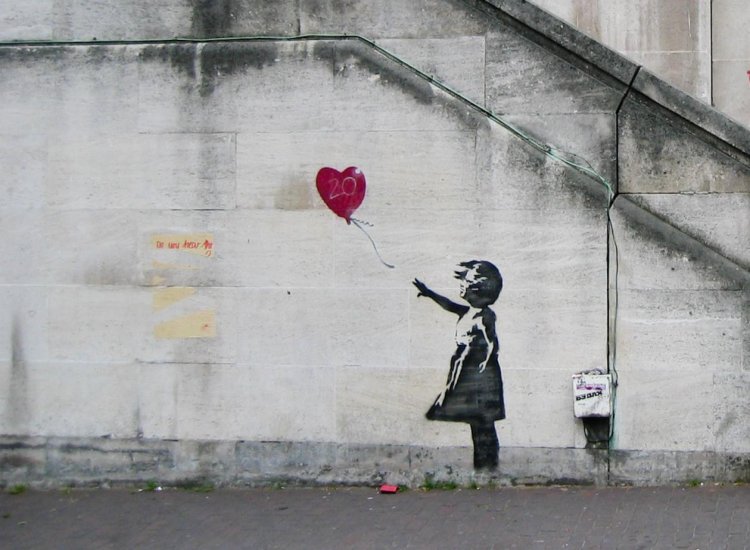
In another poll, his painting “Girl with Balloon” was chosen as the most beloved artwork Britain has produced.
Some critics argue that Banksy’s anonymity plays a role just as important as his stencils and spray paint, reports RTE.
British newspapers have published numerous reports over the years attempting to uncover who he really is.
Nevertheless, Banksy and those close to him refuse to discuss the matter.
Some individuals have signed non-disclosure agreements.
TheLiberal.ie won’t quit
Please support us with a small donation on PayPal!

Others remain silent out of loyalty, or out of concern about upsetting the artist, his supporters, and his powerful company, Pest Control Office, which verifies his artworks and determines who is given the first opportunity to purchase Banksy’s newest creations, reports RTE.
When the bathtub mural and several other Banksy works began appearing in Ukraine, Reuters became curious about the artist and how the stunt had been carried out.
Horenka lies less than eight kilometres east of Bucha, where Russian troops had left at least 300 civilians dead seven months earlier, reports RTE.
After the murals in Ukraine appeared, Banksy shared a video on Instagram confirming the artworks were his.
The video also showed a painter in Horenka wearing a grey hoodie.
The clip was shot from behind the individual, keeping his face hidden, reports RTE.
Reuters journalists travelled to Horenka a few weeks after the mural surfaced.
They brought a photo lineup of graffiti artists frequently rumoured to be Banksy and showed the pictures to residents to check if anyone recognised the person.
Among those included in the Reuters photo lineup was Thierry Guetta, a street artist known as Mr Brainwash, reports RTE.
Mr Guetta appeared in Banksy’s Oscar-nominated 2010 documentary, “Exit Through the Gift Shop”.
Mr Guetta is French, while Banksy has previously said he is from Bristol, England.
Considering Mr Guetta’s nationality and his involvement in the documentary, he appeared to be an unlikely candidate, reports RTE.
Even so, the possibility that Banksy might secretly appear in his own film would align with his reputation as a prankster who hides in plain sight.
Another possible identity, and perhaps the strongest candidate, was Robin Gunningham, reports RTE.
The Bristol-born man had been “unmasked” as Banksy in 2008 by The Mail on Sunday.
The British tabloid stated that its year-long investigation had “come as close as anyone possibly can to revealing” Banksy’s identity. But it hedged a bit, reports RTE.
Its front page displayed a photograph of a man “believed to be Banksy”.
When that image first appeared years before the 2008 article, the artist’s manager denied it showed Banksy, reports RTE.
A third person in the lineup also came from Bristol: Robert Del Naja, the frontman of the trip-hop band Massive Attack, reports RTE.
A pioneer in graffiti known as 3D, Mr Del Naja organised a 2013 exhibition showcasing artwork he had created for Massive Attack.
The exhibition took place at a London gallery run by Banksy’s former manager, Steve Lazarides, reports RTE.
In 2016, a Scottish writer discovered that several Banksy street artworks appeared in the same locations and around the same time that Massive Attack had recently performed there, reports RTE.
Horenka resident Tetiana Reznychenko told Reuters she had made coffee for the two men responsible for the bathtub mural and had seen both painters without their masks.
As reporters scrolled through the photo lineup on a cellphone, Reznychenko shook her head to indicate she did not recognise anyone, reports RTE.
Then, when one particular image appeared, her eyes widened even though she denied recognising the person in the photograph, reports RTE.
That man was Robert Del Naja.
Tell us your thoughts in the Facebook post and share this with your friends.

