

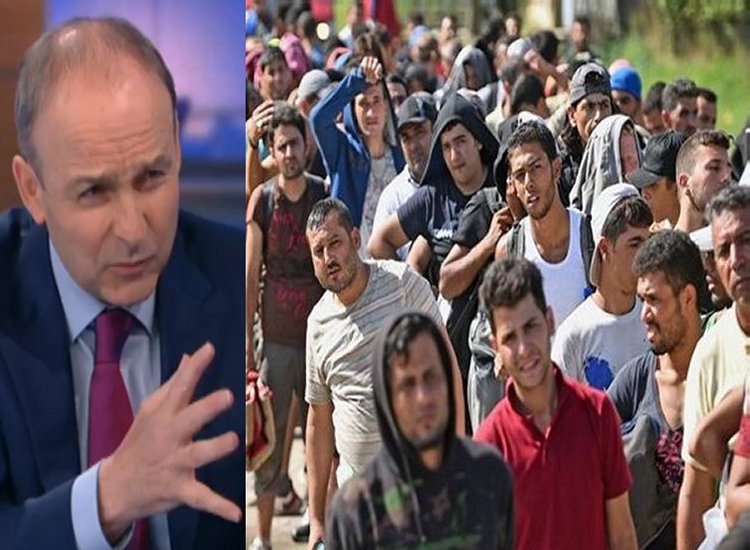
New research from the ESRI shows that foreign-born residents are more likely to be employed, actively participating in the labour market, and have higher education levels compared to those born in Ireland, reports RTE.
The most recent Monitoring Report on Integration examined the experiences of migrants versus Irish-born people across employment, education, social inclusion, and civic engagement.
It highlights that migrants tend to have lower incomes and are more vulnerable to poverty and deprivation (14.5%) compared to Irish-born residents (11%), reports RTE.
The study also found migrants are far more likely to be burdened by high housing costs, with 37% spending over 30% of their income on housing, compared to just 9% of Irish-born individuals.
The ESRI described the housing cost disparities as “particularly stark,” reports RTE.
This report is a joint publication by the ESRI, the Department of Children, Equality, Disability, Integration and Youth, and the Department of Justice.
It is the latest in a series of studies tracking how migrants in Ireland are progressing, reports RTE.
The research found that since 2022, migrant employment and labour market participation rates have consistently been higher than those of Irish-born residents.

Employment rates have rebounded since 2021, when they had dropped to the same level as the Irish-born population during the Covid-19 pandemic.
Regarding education—key for integration—the report found that migrants have higher overall educational attainment than Irish-born people, reports RTE.
Between 2021 and 2023, 59% of working-age foreign-born residents held tertiary education qualifications, compared to 42% of Irish-born residents.
Educational attainment varied by origin, with the lowest rates among migrants from eastern EU countries (38%) and the highest among those from Asia (79%), reports RTE.
In 2024, excluding agriculture, Irish-born residents (10.3%) were still more likely than foreign-born residents (8.4%) to be self-employed.
However, self-employment rates were higher among those born in the UK (15.3%) and those from North America, Australia, and Oceania (15.5%), reports RTE.
The research also noted a rise in political participation by immigrants, with the number of immigrants running for and winning seats doubling in the 2024 local elections, though from a low baseline.
Still, councillors with migrant backgrounds make up just 2.2% overall, reports RTE.
“Recent positive developments in migrant integration include strong growth in the African employment rate and improvements in citizenship processing times,” said Evan Carron-Kee, co-author of the report. However, there are also some persistent challenges. Migrants are disproportionately impacted by the housing crisis and are much more likely to experience income poverty and deprivation. These issues require urgent policy attention,” Mr Carron-Kee added,” reports RTE.
Tell us your thoughts in the Facebook post and share this with your friends.
