

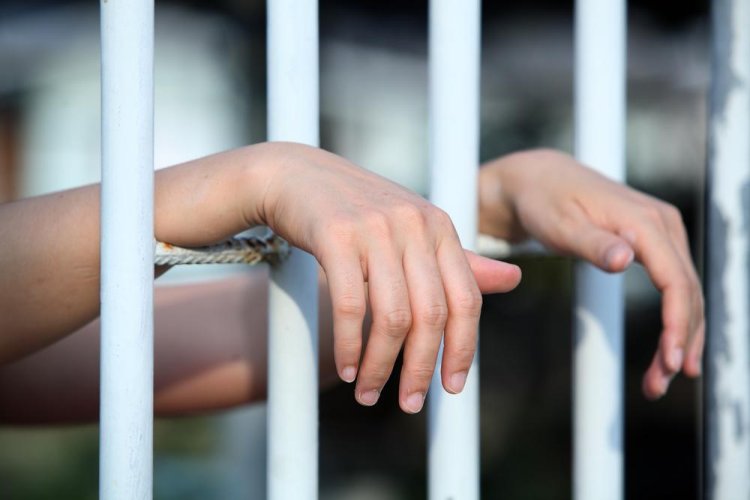
A Council of Europe report has found that overcrowding in Irish prisons remains a “chronic issue,” with some inmates being forced to live in “squalid conditions,” reports RTE.
The report, issued by the Council of Europe’s Committee for the Prevention of Torture (CPT), noted that despite some reforms, persistent overcrowding continues to negatively impact safety in men’s prisons and mental health services remain inadequate.
Last year, the committee visited five different prisons, along with the Central Mental Hospital, the Oberstown Children Detention Campus, and the Ballydowd Special Care Unit, reports RTE.
They acknowledged a number of improvements since their last visit in 2019, such as enhanced prison infrastructure, reduced use of solitary confinement, more opportunities for temporary release, and near elimination of “slopping out” practices.
Despite these gains, the committee urged Irish authorities to take decisive action to tackle several serious problems.
They observed that the physical safety of inmates in male prisons has significantly worsened, reports RTE.
Violence between prisoners was said to be common, and complaints of staff abuse had grown since 2019, especially in Cloverhill and Limerick Prisons.
The CPT said it received numerous allegations that staff used excessive force during prisoner control, restraint, and relocation operations, reports RTE.
The report also raised concerns about recurring, preventable deaths in custody—particularly among inmates suspected of carrying drugs internally—and criticised the lack of effective review systems to prevent future incidents.
Overcrowding, described as a “chronic” concern, has led to single and double cells being shared by three or four prisoners, “sometimes in squalid conditions,” reports RTE.
The committee found that inmates held in segregated areas for their own protection were often confined to their cells for up to 23 hours per day—something they warned could constitute inhuman and degrading treatment.
Mental health services in prisons were deemed severely lacking, with the committee emphasizing that prisons are unsuitable environments for those suffering from serious mental illnesses, reports RTE.
On the subject of youth detention, the CPT said Ireland does not have enough places in special care units, which leads to extended stays for young people waiting for proper placement.
It also noted that efforts to reintegrate young offenders were hindered by a lack of step-down or temporary release programmes, reports RTE.

In response to the report, the Government welcomed the recognition of reform progress but admitted that prison overcrowding was a major challenge.
It pointed to actions taken, such as new laws to expand Community Service Orders and increase Restorative Justice referrals, reports RTE.
According to the Government, 134 new prison spaces have been added since last year, with 100 more to come this year and a total expansion of 1,500 places committed under the Programme for Government.
It added that the Irish Prison Service would address the concerns raised in the report and work to carry out the committee’s recommendations where feasible, reports RTE.
“Irish authorities have provided a detailed response outlining how they intend to address the recommendations made by the Committee in each of the areas covered by the report, including prisons, children’s establishments and the Central Mental Hospital.
“The Committee will be engaging in constructive dialogue with the Irish authorities on these matters going forward,” the Council of Europe’s Committee for the Prevention of Torture said, reports RTE.
The Irish Penal Reform Trust (IPRT), which advocates for prisoners’ rights, said the report underlines the “detrimental impact” of overcrowding “on the lives of people deprived of their liberty.”
The organisation said such treatment “may amount to inhuman and degrading treatment, absolutely prohibited by the European Convention on Human Rights,” reports RTE.
Saoirse Brady, Executive Director of IPRT, said that prison conditions have worsened to an “unacceptable and unsafe level” because of the rising prison population and resulting overcrowding.
“Once again, the CPT has repeated its call for the State to ratify the ‘Optional Protocol’ to the Convention against Torture (OPCAT). At a time when the situation across the prison estate is so dire, IPRT supports the Committee’s recommendation to put in place and invest in preventative mechanisms to proactively identify and address the root causes of ill-treatment in Irish prisons,” she said, reports RTE.
IPRT said the Irish Prison Service is currently “treading water” and that “it is clear that in the current context it is simply not possible for it to comply with basic human rights standards.”
“However, responsibility does not fall solely on the prison authorities as the Government must take clear and immediate action to reduce the prison population and alleviate pressure on the system,” it added, reports RTE.
The IPRT agreed with the CPT’s recommendation that once a prison has reached full capacity, no additional inmates should be admitted.
“Reducing the population in pre-trial detention and expanding the availability and encouraging greater use of community-based sanctions, where those are appropriate, is a clear way to do this safely and effectively. Legislation to address these key issues must be prioritised,” it said, reports RTE.
Tell us your thoughts in the Facebook post and share this with your friends.

