

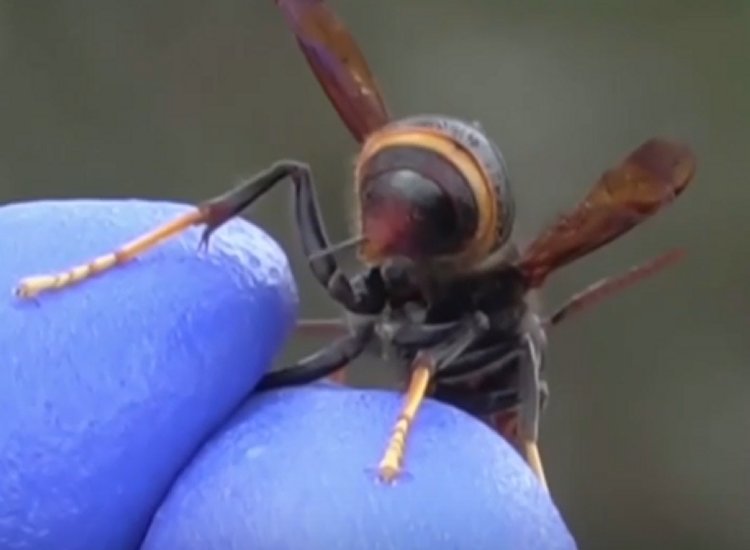
An Asian hornet nest has been discovered in a sycamore tree in Cork city after a “focused effort” by the National Parks and Wildlife Service (NPWS), reports RTE.
John Kelly, who manages the invasive species programme at the National Biodiversity Data Centre, explained that the nest’s position made it challenging for the field team to detect.
Speaking on RTÉ’s Today with Claire Byrne, he stated that they will now evaluate the nest’s location to determine a safe and effective way to manage it, reports RTE.
He mentioned that no other nests have been found in Ireland and that they are continuing to ensure that this is the only one.
“We’re going to work through this problem and we’re going to make sure that we’re able to give Ireland the best possibility of keeping this species out,” he said, reports RTE.
“They’re a particularly voracious predator of honeybees but also we’re learning more and more that they’re driving declines of pollinators and affecting how native pollinators might behave as well, so we’re very concerned for honeybees and we’re very concerned for native pollinators,” reports RTE.
Mr Kelly noted that the threat to human health is “very, very low”, especially due to the limited size of the hornet population.
He added that these insects are not typically aggressive unless someone is close to their nest — which is rare for most people.
He encouraged individuals to report any possible sightings and, if possible, to take a picture of any insect they suspect might be an Asian hornet, reports RTE.
In the meantime, Minister of State for Nature, Heritage and Biodiversity Christopher O’Sullivan stated that the nest was located “in and around” the site where the first Asian hornet was identified earlier this month.

That spotting and capture marked Ireland’s second verified Asian hornet case, leading to the formation of the Asian Hornet Management Group, which is led by the NPWS.
Thorough monitoring was conducted to check for a broader presence, and the search was ramped up after further sightings were reported.
For operational reasons, the department is not revealing the locations of the sightings and the survey operations, reports RTE.
The taskforce has sought guidance from UK experts and continues to watch the situation carefully, according to a statement from the Department of Housing, Local Government and Heritage.
Mr O’Sullivan said officials had believed for several weeks that the nest was close to where the hornet was initially spotted.
He also noted that there was a “focused effort” involved in locating the nest, reports RTE.
Asian hornet nests include multiple queens, each of which could start a new colony after departing the current nest.
However, he pointed out that this usually happens later in the autumn season, giving authorities time to act early, reports RTE.
“We will obviously remove the nest and the population of hornets within that nest will be destroyed,” he said, reports RTE.
“The nest itself then will be taken to the National Museum of Ireland. It will be investigated and DNA tests will be carried out to find out exactly where we think this hornet may have originated from. If this species did get a foothold, what it would mean for our native pollinators – things like hoverflies, bumblebees, solitary bees, and of course beekeeping – would have been devastated,” Mr O’Sullivan added, reports RTE.
“So I’m proud that we actually have got out ahead of this and responded so quickly,” reports RTE.
The Asian hornet is a major threat to Ireland’s biodiversity; even one nest can severely damage honeybee populations, though it isn’t considered a significant risk to human health.
According to the department, Asian hornets are not usually aggressive, though they might sting if provoked.
People who think they have seen an Asian hornet are urged not to approach or try to catch it, but instead to notify the National Biodiversity Data Centre and provide a photo if they can, reports RTE.
Tell us your thoughts in the Facebook post and share this with your friends.

