

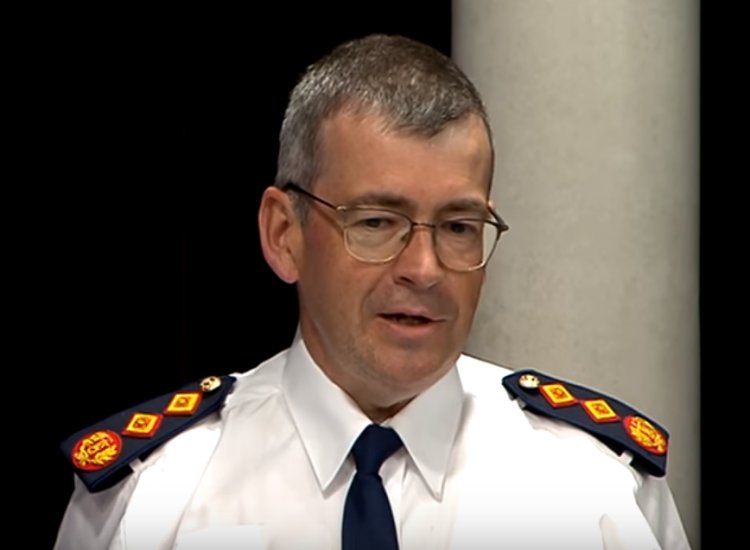
Garda Commissioner Drew Harris has confirmed that the investigations into the deaths of Tina Satchwell and Michael Gaine are undergoing reviews, reports RTE.
He acknowledged that, “in hindsight”, it might appear “very obvious” where Ms Satchwell’s body was found—inside the house in Youghal, Co Cork, where she lived.
A report detailing the inquiry will be submitted to both the Minister for Justice and the Policing and Community Safety Authority, the commissioner stated, reports RTE.
He also mentioned that gardaí are carrying out a peer review of the investigation into the case of Co Kerry farmer Michael Gaine.
Mr Harris noted that there are important lessons to be taken from murder cases that originally begin as missing persons investigations, reports RTE.
He expressed understanding about the public’s concerns regarding the fact that Ms Satchwell’s remains were not located during the initial 2017 search of the home she shared with her husband and killer.
Richard Satchwell received a life sentence for her murder earlier this week.
Commissioner Harris explained that the original investigation in 2017 gathered a large volume of data about financial transactions and communications, and no blood traces were detected by forensic experts during the search, reports RTE.
However, he emphasized that the early stages of the investigation were “hamstrung by the lack of information in comparison to the subsequent investigation of this matter”.
He added that Ms Satchwell suffered from coercive control and social isolation, and there were “very few others we could speak to what her life was like”, reports RTE.
Mr Harris said it was too soon for him to assess how effective the initial search had been, as he wished to first examine the files and conduct a full review.

He also said that in recent years, gardaí have observed a recurring pattern in such cases and are now focusing on ensuring they consider the possibility of criminal activity when dealing with missing persons cases, reports RTE.
The commissioner explained that the Michael Gaine investigation is being peer-reviewed because “learning around those who would commit crime and then dispose of the body and are often successful in disposing of the body” is important.
According to Mr Harris, all missing persons reports have been reviewed and no other cases of homicide have been identified, reports RTE.
He made these remarks while attending the graduation ceremony of 120 new gardaí at Templemore in Co Tipperary.
Pat Marry, a retired detective inspector and senior investigating officer, said he believed that failing to use a cadaver dog during the original search of the Satchwell residence was a “missed opportunity”, reports RTE.
These dogs are specially trained to locate human remains.
“A cadaver dog would have picked up on that straight away,” Pat Marry told RTÉ’s Drivetime.
“The warrant that they had, it’s what’s called a Section 10 warrant, they were looking for evidence of blood … they didn’t find that, reports RTE.
“Why would they find blood if he [Richard Satchwell] suffocated her or strangled her.”
Mr Marry welcomed the case review, saying valuable lessons might emerge from it.
“But there are dozens of retired detective inspectors and detective superintendents who would have investigated murders in the past, reports RTE.
“As far as I am aware, none of them, including myself, have ever been asked back to the Garda College to give a lecture or a talk on murders or of things that may be of benefit to up-and-coming detectives,” reports RTE.
He added that the experience he and other retirees have gathered over the years has never been “recycled” back into the Garda service.
Mr Marry also shared that he had submitted a parliamentary question about why An Garda Síochána has not considered re-hiring retired officers on a contractual basis—“people with track records and ample training”—to help with missing persons cases and unsolved murders.
“They do it in every other European country,” and in the PSNI, he said, reports RTE.
Tell us your thoughts in the Facebook post and share this with your friends.

