

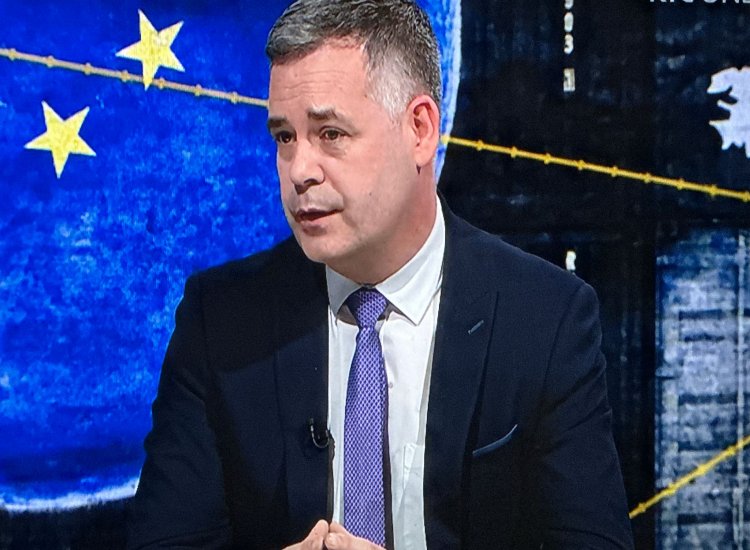

Sinn Féin stirred controversy by pushing for an all-island response to the United States’ new tariffs, a move that would increase Northern Ireland’s current 10% rate to match the Republic’s 20%. The proposal, aired shortly after President Donald Trump’s “Liberation Day” address set the tariffs—20% on EU imports and 10% on the UK—has sparked fierce debate over its economic cost to the North.
Sinn Féin leader Mary Lou McDonald, addressing the Dáil, stressed the need for a cohesive economic strategy across the island. She argued that only a unified tariff policy could protect jobs and maintain trade stability under the Good Friday Agreement, according to her remarks reported by RTÉ, suggesting Northern Ireland should align with the EU’s 20% rate.
The Republic faces a 20% tariff, effective midnight, jeopardizing its €50 billion U.S. trade surplus, while Northern Ireland’s 10% rate offers a comparative advantage for its £10 billion in exports. The Northern Ireland Chamber of Commerce warned that matching the South’s higher tariff could slash export earnings by 5%, with president Cathal Geoghegan telling the BBC that such a move would severely undermine local businesses.
Northern Ireland’s leaders are divided. First Minister Michelle O’Neill, also of Sinn Féin, suggested to UTV that a joint approach could benefit the island in the long run, though she acknowledged the immediate economic strain it might cause. DUP leader Gavin Robinson, speaking to Sky News, dismissed the idea as reckless, warning that doubling the tariff would destroy jobs for no clear gain and accusing Sinn Féin of chasing a political dream over practical sense.
Taoiseach Micheál Martin rejected the proposal outright, explaining to RTÉ that while the idea of unity is appealing, Northern Ireland’s trade falls under UK jurisdiction, not Ireland’s. He underscored the priority of a collective EU response, with Tánaiste Simon Harris due in Brussels today. Analysts doubt the EU would support a plan pulling Northern Ireland into its tariff regime.
The tariff gap, a Brexit byproduct, risks skewing cross-border trade, with goods potentially rerouted through Belfast to avoid the Republic’s 20% rate. Sinn Féin’s push aims to eliminate this imbalance, but critics say it would drag Northern Ireland down instead. Economist David McWilliams, on Newstalk, cautioned that asking the North to shoulder the South’s burden could ignite a fierce backlash from Belfast’s business community.
Tensions are rising, with protests planned in Derry over tariff-related job fears. Sinn Féin maintains that a shared approach outweighs the drawbacks, with McDonald emphasizing to reporters that the island’s economic fate shouldn’t be dictated by post-Brexit divides. Yet, as the UK capitalizes on its 10% rate and the EU gears up for retaliation, Sinn Féin’s bold stance may widen rifts rather than heal them.
Tell us your thoughts in the Facebook post and share this with your friends.

