

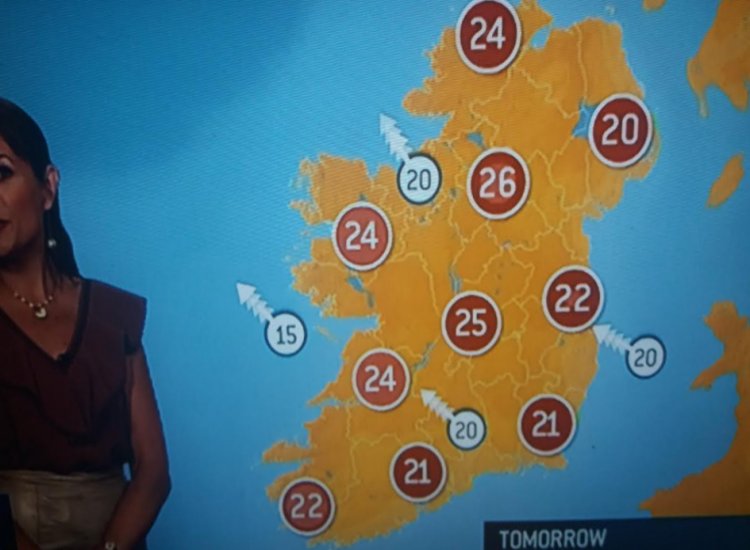
This weekend, Ireland could see temperatures approach the country’s historical highs, with Met Éireann forecasting values in the “low 30s” across parts of the country, reports RTE.
The nation’s highest ever temperature was recorded in 1887 at Kilkenny Castle, reaching 33.3C. Forecasters now suggest that Saturday’s heat could come close to this historic figure.
During an appearance on RTÉ’s Drivetime, Met Éireann meteorologist Siobhán Ryan noted that some areas might see highs in the “low 30s”, reports RTE.
“Anywhere across the midlands, the Dublin region I’d say 28 on Saturday,” she said, reports RTE.
“To put it into context, last year the highest temperature for the summertime was 26.6C. We already exceeded that on 30 June, we got a temperature of 29.6C in Roscommon, so if the temperatures climb into the low 30s, that’s really on the extreme end of what we’re used to in Ireland,” reports RTE.
Met Éireann has issued a Status Yellow high temperature warning covering both Friday and Saturday, with daytime highs expected to exceed 27C.
The warning, which applies to counties Carlow, Dublin, Kildare, Kilkenny, Laois, Longford, Louth, Meath, Offaly, Westmeath, Cavan, Monaghan, Roscommon, and Tipperary, comes into effect from midday Friday and remains in place until 6am Saturday, reports RTE.
A separate Status Yellow warning for the entire country begins at midday on Saturday and expires at 6am on Sunday.
The UK Met Office has not issued any corresponding warnings for Northern Ireland, reports RTE.
Met Éireann has cautioned that temperatures may rise above 27C during the day and remain above 15C overnight.
The hottest day so far this year—and the warmest in Ireland in three years—was recorded last month in County Roscommon.
Mount Dillon recorded a temperature of 29.6C on 20 June, reports RTE.
According to Met Éireann, this was the highest temperature documented since August 2022.
The HSE has identified certain groups as being especially vulnerable during hot weather, including:
Babies and young children
Adults over 65 and those with existing health conditions like heart or respiratory problems, Alzheimer’s disease, or dementia
People who spend extended periods outdoors or in warm environments, such as outdoor workers or the homeless
Recommended tips for staying cool indoors include:
Turning off unnecessary lights and appliances to reduce heat
Keeping sun-facing windows shut during the day and opening them at night
Closing curtains in sunlit rooms and using a damp cloth or misting water on skin or the back of the neck
If using a fan, only do so when the temperature is below 35C, reports RTE.
When outdoors, people should:
Stay in shaded areas
Avoid going outside between 11am and 3pm—the hottest part of the day
Wear loose, light clothing that covers the skin
Wear a wide-brimmed hat and sunglasses
Apply water-resistant UVA and UVB sunscreen regularly, using factor 30+ for adults and 50+ for children
People are also encouraged to drink plenty of fluids, with water or rehydration sachets being ideal, reports RTE.
The HSE recommends that adults consume about two litres of water within 24 hours.
Hydration is considered adequate when urine appears pale and clear, reports RTE.
The Irish Pharmacy Union (IPU) reminded the public to enjoy the sunny conditions responsibly.
Susan O’Dwyer, the union’s head of professional services, pointed out that skin cancer is Ireland’s most common cancer, and the number of diagnoses is increasing, reports RTE.
She advised people to cover as much skin as possible when outdoors.
“No sunscreen can provide 100% protection; it should be used alongside other protective measures such as clothing,” she said, reports RTE.
“Cover skin as much as possible, wear long sleeves, collared t-shirts and clothes made from close-woven material that does not allow sunlight through,” reports RTE.

Ms O’Dwyer also stressed the importance of sunscreen and dismissed the idea of a “safe” tan.
“Apply sun cream with a sun protection factor (SPF) of at least 30+ for adults and 50+ for children, with high UVA and UVB protection and that is water resistant,” she said, reports RTE.
“Skin damage does not just happen on holiday in hot, sunny places. The sun is strong enough to cause damage here in Ireland between April and September, even on cloudy days,” reports RTE.
She added that wide-brimmed hats help shield the face, ears, and neck, and sitting in shaded areas is preferable to direct sunlight.
“Use a sunshade on your buggy or pram and keep babies and children out of direct sunlight,” Ms O’Dwyer added.
The Road Safety Authority (RSA) has warned drivers about sun glare and is urging increased caution on roads during the heatwave.
The RSA explained that sun glare can impair drivers’ vision, and suggested wearing sunglasses while driving, reports RTE.
It also advised motorists to keep bottled water in their vehicles in case of delays, noting that children and pets are especially vulnerable in hot cars.
Drivers should ensure their windscreens are clean, inside and out, and should stay alert for pedestrians, cyclists, and motorcyclists, reports RTE.
“Summertime is the most dangerous time of the year on our roads. In the summer, when there are no obvious dangers, and the weather is fine and days are brighter, we drop our guard,” The RSA said in a statement, reports RTE.
“There can be a spike in pedestrian, people who cycle and motorcyclist casualties over the summer months as the fine weather brings more people on to the roads. Drivers need to be on the lookout for them, reports RTE.
“Slow down and expect the unexpected,” reports RTE.
The Irish Blue Cross has reminded dog owners to walk their pets early in the morning or late in the evening to avoid the heat.
The organisation warned that many animals find it hard to cool themselves, which increases their risk of heatstroke and dehydration.
Pet owners should ensure their animals have constant access to clean water and should never leave them in a hot car, reports RTE.
“Obvious signs of heatstroke include collapse, excessive panting or breathing heavily, and dribbling. Please move your pet to a cool place, wet their coat thoroughly and contact a vet immediately,” advised Dr Sophie Olah, the head of veterinary services at the Irish Blue Cross, reports RTE.
Cat owners are also being urged to keep pets indoors on particularly hot days to prevent them from becoming trapped in spaces like sheds or greenhouses.
Veterinarian Pete Wederburn noted that most cases of dog heatstroke—about 75%—occur due to outdoor exposure in high temperatures.
Speaking to RTÉ’s Drivetime, he said early intervention can improve survival chances, reports RTE.
“What’s happening is, they’re outside in the sunshine, their body is heating up, and because they’re exercising, their muscles are producing extra heat,” he said, reports RTE.
“Next thing, they go past the tipping point and they’re just overwhelmed and their body can’t keep them cool any longer and they collapse,” reports RTE.
Mr Wederburn said this can occur within minutes, and pet owners often don’t realise their dog is in distress.
“Dogs always pant when they’re out walking, but they just start to pant more and more, and eventually they just flop down.”
He advised against walking dogs during peak heat hours—between 11am and 7pm, reports RTE.
“If your dog does flop down like that in the heat and doesn’t want to move, then you can assume that they’re almost certainly overheated, and what’s really important is that you need to cool them down quickly. You do need to get them to the vets, but you need to start the cooling down process before you get to the vets,” he added, reports RTE.
“If possible, take them out of direct sunlight, take them somewhere shady; if possible, take them to a water source like a river or lake and splash water onto them so their coats getting wet, and you can also do things like get a towel or another fabric soaked in water and place it over them,” Mr Wederburn said, reports RTE.
Tell us your thoughts in the Facebook post and share this with your friends.
