

Fare evaders cost public transport services over €20 million in lost revenue last year, according to estimates from transport oversight bodies, reports The Mirror.
Some people on social media claim that foreign nationals are playing the so-called “race card” when approached for tickets on buses and trains.
Other social media users claim that they’ve actually seen migrants openly hop barriers to board trains and that security ignore them.
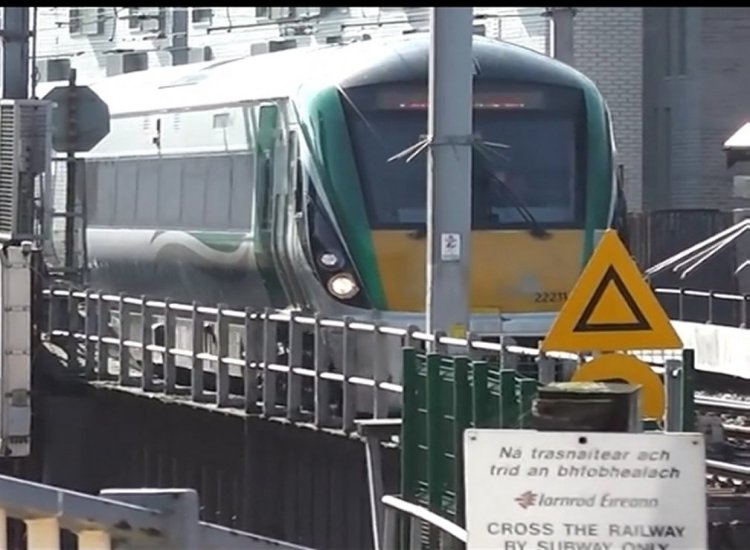
Data obtained through freedom of information by the National Transport Authority (NTA) reveals that DART and commuter rail services recorded the highest fare evasion rates in 2024, with nearly 7 per cent of passengers travelling without a valid ticket.
Surveys regularly carried out throughout 2024 on buses, trains and trams showed fare evasion rates varied across different public transport operators, reports The Mirror.

An average of almost 7 per cent of passengers on DART and commuter rail services in the greater Dublin area and Cork were found to be without valid tickets, resulting in an estimated €4.6 million revenue loss.
Some of the highest evasion levels were noted on services between Dublin and Drogheda, Dublin and Longford, and the Dublin-M3 Parkway, reaching up to 15 per cent, reports The Mirror.
Fare evasion on DART services ranged from 4 to 6 per cent, while the Cork-Mallow line had the lowest rates at just over 1 per cent.
Despite these figures, Iarnród Éireann did not face any penalties over the high rates of fare evasion, reports The Mirror.
Conversely, Iarnród Éireann’s intercity routes saw the lowest fare evasion rate among all public transport options in 2024, with just over 1 per cent of passengers travelling without a valid ticket. This still accounted for €2.2 million in lost revenue.
“The NTA will continue to work closely with transport operators to further address this issue,” the spokesperson added, reports The Mirror.
Transdev, which operates the Luas, said fare compliance figures are a vital resource for maintaining and improving compliance. “It helps us inform the planning and targeted deployment of our Revenue Protection and Security Teams on what is known as an open system where there are no physical barriers to entry,” a spokesperson said, reports The Mirror.
Tell us your thoughts in the Facebook post and share this with your friends.

