

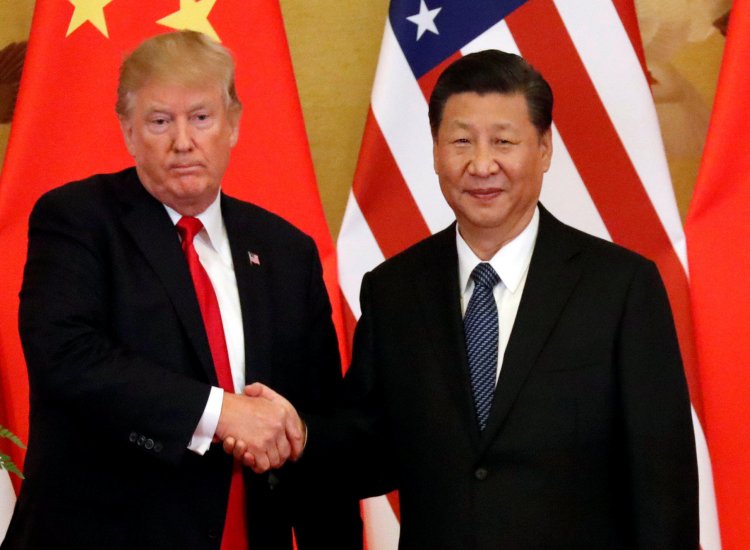
In a dramatic escalation of the U.S.-China trade war, Beijing announced on April 11, 2025, that it would impose 125% tariffs on all American goods entering its market, a direct countermeasure to President Donald Trump’s recent tariff hikes on Chinese imports. The move, confirmed by China’s Ministry of Finance, came hours after Trump raised U.S. tariffs on Chinese goods to 145%, up from 125% announced earlier in the week, with an additional 20% levy tied to fentanyl and immigration issues. This tit-for-tat exchange, unfolding against a backdrop of global economic uncertainty, has rattled financial markets, fueled recession fears, and left businesses on both sides grappling with the fallout.
China’s decision to match Trump’s 125% rate—up from its earlier 84% tariffs set on April 9—underscored Beijing’s resolve to stand firm. “The United States has ignored fair trade principles and endangered China’s development rights,” a Ministry spokesperson declared, framing the tariffs as a necessary defense of national interests. The 125% duties blanket U.S. exports, from agricultural staples like soybeans and pork to industrial goods like aircraft and machinery, effectively pricing many American products out of China’s $18 trillion economy.
The announcement triggered chaos in global markets. Asian stocks, already battered by days of trade war volatility, slid further, with Hong Kong’s Hang Seng dropping 4.2% and Japan’s Nikkei falling 3%. Wall Street followed suit, with the S&P 500 shedding 3.5%—erasing much of a brief rally sparked by Trump’s temporary pause on tariffs against other nations. The Dow Jones Industrial Average plummeted over 1,000 points, and gold prices surged to a record $3,200 an ounce as investors sought safe havens. “There are no winners in a tariff war,” Chinese President Xi Jinping said during a meeting with Spain’s Prime Minister Pedro Sánchez, urging other nations to resist “unilateral bullying.”

The roots of this latest flare-up trace to Trump’s aggressive trade policy since taking office in January 2025. On April 2, he imposed a 10% baseline tariff on all U.S. imports, followed by country-specific levies that hit China hardest. By April 9, U.S. tariffs on Chinese goods reached 104%, prompting China’s 84% retaliation. Trump’s subsequent jump to 145%—announced with fiery rhetoric about addressing trade imbalances and fentanyl flows—left little room for de-escalation. China’s 125% tariffs now threaten to choke off U.S. exports, which totaled $150 billion to China in 2024, including $40 billion in agriculture.
American businesses and farmers face dire consequences. In Illinois, soybean farmer Lisa Bennett described the tariffs as “a death knell,” with China’s market—once absorbing 60% of U.S. soybean exports—now virtually inaccessible. Tech giants like Apple, reliant on Chinese manufacturing, saw shares drop 5% amid fears of supply chain disruptions. Meanwhile, U.S. consumers brace for higher prices, as tariffs inflate costs for everything from electronics to clothing.
Beijing’s strategy extends beyond tariffs. Xi has called on the EU, Australia, and others to form a united front against U.S. trade policies, though responses have been mixed. The EU, which paused its own retaliatory tariffs on $21 billion of U.S. goods to pursue talks, remains wary of aligning with China. Australia, a key U.S. ally, declined Beijing’s overtures. Still, China’s Foreign Ministry insisted it remains open to dialogue, provided it’s based on “mutual respect.”
Trump, speaking at the White House, defended his tariffs but hinted at flexibility. “We’d love to work a deal with China,” he said, claiming 75 countries were negotiating trade pacts to avoid U.S. levies. Yet analysts warn the damage is mounting. JPMorgan Chase CEO Jamie Dimon called a U.S. recession “likely,” citing trade policy chaos. The S&P 500, down 15% from its peak, teeters near bear market territory, with $6 trillion in value lost since early April.
As the trade war spirals, the global economy hangs in the balance. In New York, traders described the mood as “panicked,” with no clear end in sight. For now, the U.S. and China remain locked in a high-stakes standoff, each daring the other to blink, while the world watches—and pays the price.
Tell us your thoughts in the Facebook post and share this with your friends.
