

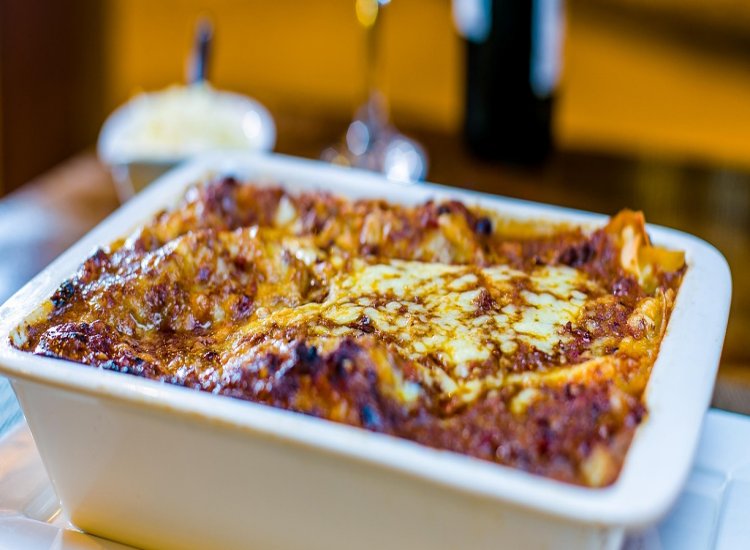
Ballymaguire Foods, the company behind the ready meals recently recalled due to a listeriosis outbreak, has been granted permission to restart its production operations, reports The Mirror.
Last month, the Food Safety Authority of Ireland (FSAI) confirmed that one individual had died as part of the outbreak, which was linked to several reported listeriosis cases.
As a precaution, Ballymaguire withdrew its products, halted production, and carried out several corrective measures, including a full pharmaceutical-standard deep clean of its facility, reports The Mirror.
The company also brought in Dr Patrick Wall – a former Chief Executive of the FSAI, past Chair of the European Food Safety Authority, and ex-Professor of Public Health at UCD – to head a response team working alongside public health authorities to address the issue.
On Friday, Ballymaguire Foods announced that it had received the green light from the Health Service Executive’s (HSE) Environmental Health Service to resume operations. The company stated that this followed a “comprehensive process undertaken in close coordination with the HSE’s Environmental Health Officers and the Food Safety Authority of Ireland (FSAI)”, reports The Mirror.
Production at Ballymaguire’s facility will begin again from Friday (August 8), with its products set to return to supermarket shelves starting next Tuesday (August 12).
“Official approval to resume production follows the completion of a thorough review into the recent detection of Listeria at one of our production sites,” read a Ballymaguire Foods statement, reports The Mirror.
“We appointed Professor Patrick Wall, a public health expert and former Chief Executive of the FSAI, to lead our response, which was carried out in close collaboration with all relevant public health and regulatory authorities,” reports The Mirror.

Professor Patrick Wall said: “Listeria is a naturally occurring, complex, and challenging bacteria that, while rare, requires close attention and strong controls in food environments. Managing it is not just about routine hygiene—it requires a deep understanding of how it behaves and an unrelenting attention to detail. In response to this incident, Ballymaguire Foods has implemented protocols that go beyond best practice, fully align with regulatory standards, and set a benchmark that exceeds industry norms,” reports The Mirror.
“The actions taken are backed by substantial investment and reflect a renewed focus on precision, accountability, and continuous improvement throughout the organisation. Every measure is grounded in international best practice and scientific evidence, with a focus on maintaining the highest standards of food hygiene and consumer health protection. The decision to grant approval for production to resume reflects the authorities’ confidence in the steps taken. While Listeria infection is rare and primarily affects individuals with weakened immune systems, such as the elderly or those undergoing medical treatment, even low-probability risks must be managed with the utmost seriousness,” reports The Mirror.
“The steps taken at Ballymaguire Foods reflect a genuine commitment to protecting every consumer, and to doing so with transparency and integrity,” reports The Mirror.
Edward Spellman, Co-Founder and Managing Director, Ballymaguire Foods, added: “Our team worked closely with public health authorities and independent experts throughout this review, and I want to acknowledge their support, rigour, and professionalism. Food safety has always been central to who we are. This experience has challenged us to go even further—to enhance our systems, deepen our expertise, and apply new industry-leading standards. We acknowledge the concern this situation has caused. We are resolute in our commitment to learn from it and to strengthening the trust placed in us by our partners, customers, and consumers,” reports The Mirror.
Listeriosis can result in mild flu-like symptoms or lead to nausea, vomiting, and diarrhoea. Vulnerable groups include pregnant women, infants, and individuals with weakened immune systems, such as the elderly.
The time between infection and the onset of symptoms averages three weeks, but it can range from three to 70 days, reports The Mirror.
Tell us your thoughts in the Facebook post and share this with your friends.

