

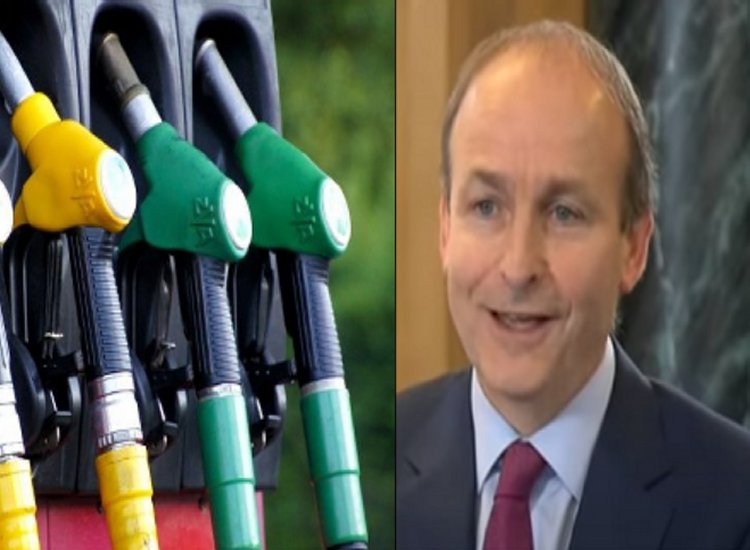
US President Donald Trump has stated that the conflict in Iran could conclude within two to three weeks, but in the meantime, fuel prices are expected to continue climbing, reports RTE.
In reaction, several countries have reduced working weeks, shortened school and shop hours, and lowered speed limits, reports RTE.
At present, the Government has no intention of changing its guidance on remote work or travel, despite appeals for the State to urge employers to offer greater flexibility to workers facing high commuting costs.
With many employees still required to travel to work, the increasing expense of fuel is placing a growing strain on workers, reports RTE.
One commuter refuelling in Balbriggan, in north county Dublin, spoke about how rising fuel prices are affecting him and his household.
“Myself and my wife both drive and we’re trying to juggle things, deciding which car we’ll put petrol into, come the end of the week. It’s very hard to manage things, and it has a knock-on effect on everything else in the house. You know, when you’ve four kids, it’s very hard to manage things and we don’t seem to be getting much leeway at all with the Government, reports RTE.
When asked if the Government should promote more flexibility for remote work, he said he believes there is already a precedent for doing so.
“It worked during the Covid pandemic. I don’t see why it can work now. It’s not possible for me, because I do shift work, but it would be great for my daughter. She can work from home, but they’ve (her employer) started to bring them back into the office now, which of course brings a massive increase in cost for her, because it means she has to travel from Balbriggan to Sandyford,” reports RTE.
“With the tolls and fuel prices, it adds a massive amount of expense. She’s 27 and she doesn’t see any hope of having a house for herself in the next five or six years because the way the economy is, it’s ridiculous,” he said, reports RTE.
Another commuter filling up in Balbriggan, who travels 100km daily for work, said he is strongly feeling the financial pressure:

“I work in Leixlip, so my place of work is 50km from here, and I’ve seen a significant increase in my commuting costs, considering the price of fuel. It’s €20 extra a week now (to travel to work), it was €2.07 last week for diesel, and now it’s €2.12,” reports RTE.
Since the outbreak of the conflict in Iran, no European Union nation has required employers to permit remote work, and according to Tánaiste Simon Harris, the Government currently has no plans to revise its remote working approach, though it continues to monitor the situation.
Meanwhile, Niall Shanahan, Media Relations Director at the Fórsa Trade Union, said early findings from a survey of nearly 20,000 members show that time and travel costs are key reasons many favour remote working, reports RTE.
“About one third of our respondents reported commuting more than an hour a day, and about one in ten say they commute more than two hours per day. The recent spike in fuel prices is obviously going to have, and is having already, a huge impact on anybody who has to commute in a private car,” reports RTE.
To help reduce the burden of rising oil prices, the International Energy Agency has advised governments to facilitate working from home where feasible.
However, IBEC’s Executive Director of Employer Relations, Maeve McElwee, noted that employers must weigh more than just commuting costs when making such decisions, reports RTE.
“You’re trying to make sure that you’re managing your client or customer needs, or your service user needs, and you’re also having to consider how you do your long-term planning and financial planning around that. If you’re planning training, or if you’re planning events, obviously you need to have some level of understanding as to how people are going to be able to get in and out of work,” reports RTE.
At the Balbriggan Enterprise and Training Centre, Sergey, a software engineer, said that denying employees the option to work remotely could lead companies to lose staff.
“When I had to go to office, I’d have to catch the train, the train would be full, I’d come to work already drained, and then going back home was same commute again. I’d get home so tired, not even from work, but from the commute,” reports RTE.
“Outside of the city centre, you have to drive a lot, and it really adds a lot of stress and cost, because the company doesn’t pay you back for the fuel, it’s not subsidised. You have to pay for it out of your pocket, but fuel prices are rising faster than your salary and that adds a lot of stress,” reports RTE.
“I think a lot of people who can’t switch to remote working, will start to consider switching employer. I would,” he said, reports RTE.
Tell us your thoughts in the Facebook post and share this with your friends.
