

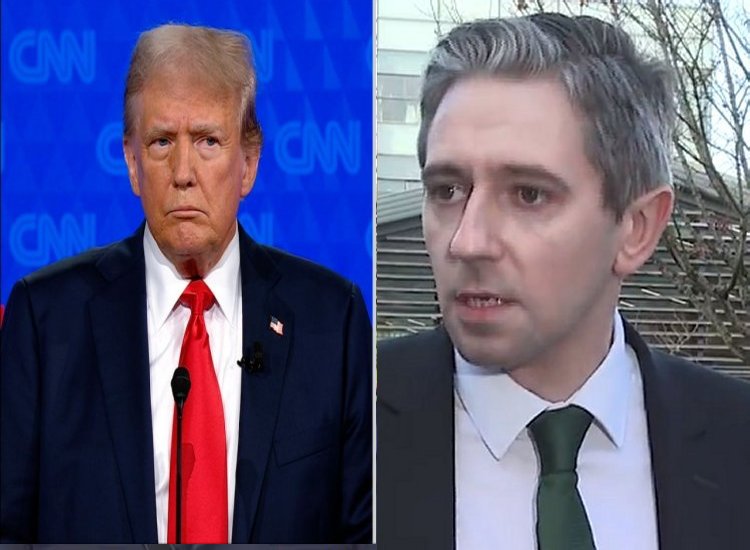
US President Donald Trump has announced that incoming tariffs on imported pharmaceutical products may rise to as much as 250%, starting at a lower rate, while also indicating new tariffs on overseas semiconductors are on the way, reports RTE.
“We’ll be putting (an) initially small tariff on pharmaceuticals, but in one year, one-and-a-half years, maximum, it’s going to go to 150%,” Mr Trump said in an interview on CNBC.
“And then it’s going to go to 250% because we want pharmaceuticals made in our country,” he added, reports RTE.
In the same conversation, Mr Trump mentioned he expects to significantly increase tariffs on Indian goods “very substantially over the next 24 hours” in response to the country’s continued purchases of Russian oil.
Since implementing a 10% tariff across almost all trade partners in April, Mr Trump has been applying varied tariff rates to goods from different nations, while excluding some items he plans to deal with separately, reports RTE.
Such targeted tariffs have generally followed official reviews that assess whether particular imports pose risks to national security.
With investigations into semiconductor and pharmaceutical imports already underway, the Trump administration has indicated it is close to concluding those studies, potentially paving the way for additional tariffs, reports RTE.
Previously, Mr Trump had introduced heavy tariffs of 50% on imported steel and aluminum, along with lower duties targeting automobiles and related components.
His latest remarks about raising pharmaceutical tariffs came shortly after the European Union said it would suspend retaliatory tariffs on U.S. products worth €93 billion following a recent deal with Washington, reports RTE.
“The commission has today adopted the necessary legal procedures to suspend the implementation of our EU countermeasures, which were due to kick in on August 7,” EU trade spokesman Olof Gill said, reports RTE.

One EU official earlier stated that the 15% duty levied on EU goods entering the U.S. is comprehensive and includes the Most Favoured Nation rate—unlike arrangements with some other countries.
This 15% charge applies broadly, the EU official noted, with the exception of steel and aluminum, reports RTE.
Currently, tariffs on pharmaceuticals and semiconductors are set at zero, but should those change following the US 232 reviews, the rate would still be capped at 15%.
That same 15% maximum also extends to car imports and automotive components. There are no restrictions or quotas placed on these items, reports RTE.
The official also noted that the EU and U.S. are nearing completion of a joint statement on their overarching trade agreement, although a release date has not yet been confirmed.
“It is pretty much ready and we are now waiting for our US colleagues to come back and confirm the final few things,” said the official, reports RTE.
Olof Gill further stated that the EU-US trade agreement finalized last week serves as a safeguard for European companies against elevated tariffs.
“We reached a negotiated solution to avoid a lose-lose situation. That’s what our member states asked for and what businesses asked for,” Mr Gill told reporters at a lunchtime press briefing in Brussels, reports RTE.
“The agreement reached will have a stable platform from which we will secure crucial supply chains,” reports RTE.
Mr Gill called remarks by Germany’s finance minister Lars Klingbeil, made during a visit to Washington, “surprising.” Klingbeil had claimed that the EU had shown weakness in its trade discussions with the U.S.
“It is surprising to us to hear that a minister from the member state in question has aired that view,” said Mr Gill, reports RTE.
Klingbeil had met with U.S. Treasury Secretary Scott Bessent during his Washington visit, seeking a special exemption for German steel from American tariffs.
Gill also confirmed that the European Commission has officially paused its planned counter-tariffs against the U.S., which had been scheduled to take effect on August 7, reports RTE.
Those EU countermeasures will be delayed by six months, he confirmed.
The mutually agreed 15% U.S. tariff on EU imports is expected to go into effect on August 8, reports RTE.
Tell us your thoughts in the Facebook post and share this with your friends.
