

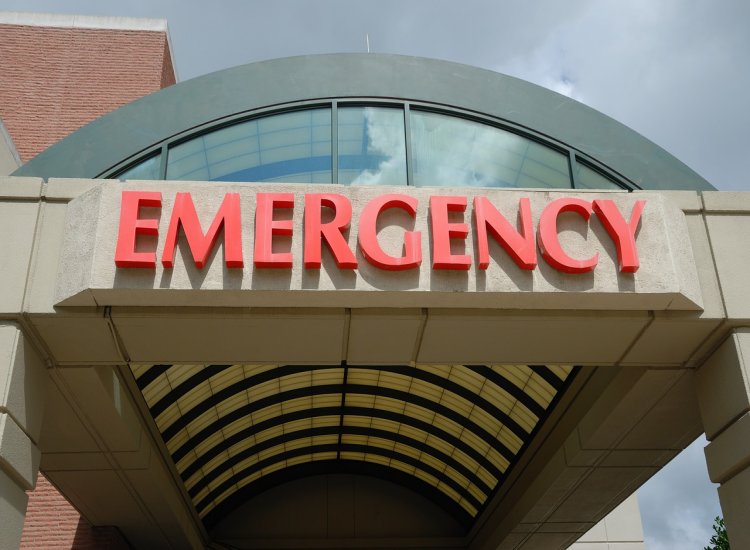
A new report has highlighted the urgent need for better acute mental health services in hospital emergency departments, reports RTE.
The Mental Health Commission’s latest analysis reveals major inconsistencies in how these services are delivered and calls for measures to improve access, particularly for those arriving “out of hours”.
It estimates that over 50,000 individuals attempt to access mental health care for the first time via hospital emergency departments annually, reports RTE.
The report, issued by the Inspector of Mental Health Services, found that many emergency departments lack the staff and resources necessary to handle this level of demand.
Led by Professor Jim Lucey, the study assessed the level of mental health care offered across 35 emergency and minor injury units nationwide, reports RTE.
It identified significant delays in patient assessment and found that most emergency departments are not equipped with suitable spaces to provide urgent mental health support.
Children’s services were found to be especially lacking, with many experiencing “prolonged and inappropriate” delays in care, reports RTE.
Prof Lucey also pointed out ongoing issues across the country in providing prompt access to mental health care for children and adolescents.
The report underlined a pressing need to alleviate the strain on Model 4 hospitals—generally located in urban areas—by strengthening services in alternative healthcare settings.
He said this approach would help distribute the demand more effectively and improve service delivery, reports RTE.
Emergency departments in these larger hospitals were described as “overburdened”, handling thousands of cases annually, compared to far fewer in smaller facilities.
Many of these departments struggle with overcrowding, raising concerns for patients, staff, and others present in the units.
The shortage of staff, services, and infrastructure is creating what the report terms a “revolving door system”, with individuals returning repeatedly to the same emergency departments for help, reports RTE.
The inspector warned that this heavy reliance on emergency departments for mental health crises won’t decline unless more investment is made in both primary care and community services, as well as emergency settings.
Prof Lucey emphasized the need for a national standard for mental health care access in emergency departments.
TheLiberal.ie won’t quit
Please support us with a small donation on PayPal!

He recommended the swift introduction of improved community supports and increased investment in Model 3 hospitals to help rebalance demand, reports RTE.
The report also stressed the importance of early intervention and suggested that community mental health teams be equipped to offer more acute, unscheduled care.
John Farrelly, CEO of the Mental Health Commission, said the findings demonstrate that all 24-hour emergency departments must be sufficiently staffed so that patients can receive appropriate care, regardless of when they seek help.
This would involve scheduling enough senior clinicians and decision-makers to be present on-site “to swiftly triage, treat or refer people who are unwell into appropriate services”, reports RTE.
Speaking on RTÉ’s Morning Ireland, Prof Lucey noted that mental health conditions are the leading cause of death among people under 50 in Ireland.
He pointed out a glaring disparity between daytime and nighttime mental health care availability, with many hospitals offering no services after 5pm.
“Mental health issues are not insignificant … The response to a surgical issue in an emergency room would be an emergency surgical response. If you go in with a fracture, you get a surgical answer to the fracture, reports RTE.
“But if you have a fractured mind and you present yourself to an emergency room, you may be waiting. You may have to take a ticket. And we found a huge difference between the day and night during the day.
“In most hospitals, there’s some degree of response much greater in the big university hospitals.”
He added that in many hospitals, patients do not even have a private room to talk about their mental health struggles, reports RTE.
“Those conversations are happening on the corridor. Presumably, they’re happening in an inappropriate place.”
Prof Lucey said what’s needed are spaces suitable for private, sensitive conversations, where people in crisis can be met with compassion and safety. “Those rooms are not available in all 24/7 emergency rooms,” reports RTE.
Minister for Mental Health Mary Butler said she has “expressed” her “impatience to the HSE at the pace of change”.
In a statement, she said: “People experiencing mental health distress and illness often find” that emergency departments are “the wrong setting for their needs”, reports RTE.
“My priority is that people in mental health crisis are provided with timely assessment and support in an appropriate environment that keeps them safe.
“Our ambition is to develop real alternative care pathways and therapeutic environments” including crisis resolution teams and crisis cafés “working out-of-hours and in the community to enable recovery,” reports RTE.
Tell us your thoughts in the Facebook post and share this with your friends.

