

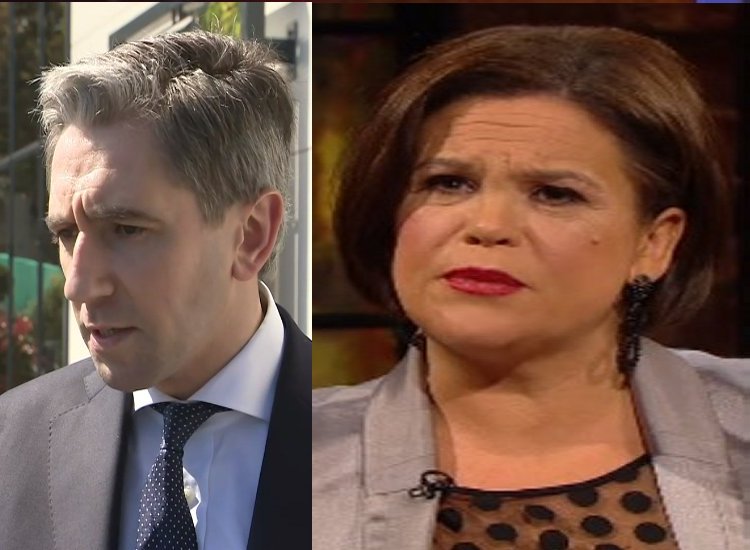
Opposition parties have called for the Dáil to be recalled amid the ongoing fuel crisis linked to the US-Israeli war on Iran.
Fuel prices for diesel and petrol have risen sharply over the past month, despite recent Government measures such as excise duty cuts that briefly reduced costs at the pumps, reports RTE.
Prices have now climbed to approximately €2.08 per litre for diesel and €1.85 per litre for petrol, with some areas experiencing even higher rates.
Mary Lou McDonald has urged the Government to “stop dithering” and recall the Dáil to address the situation, reports RTE.
Speaking at an Easter Rising commemoration event in Kildare Village, she said the coalition had only introduced “half measures” in response to the crisis.
She described the current supports as “no adequate response” and confirmed that Pádraig Mac Lochlainn had written to the Ceann Comhairle seeking an early recall of the Dáil, reports RTE.
Asked about reports that a Government information campaign may suggest measures such as carpooling and off-peak energy use, Ms McDonald said the Government had failed to act decisively.
“all the Government has done is dither” and that they need to “stop dithering” and help those affected with further support, reports RTE.
Independent Ireland has also called for the Dáil to be reconvened.
Its Agriculture spokesperson Michael Fitzmaurice warned that the crisis is escalating and requires urgent action, reports RTE.
“Ten days ago, I outlined the key issues we would face if the Government did not act.
“We are now seeing that crisis escalate in real time. We must act urgently. That is why the Dáil must be recalled immediately”, reports RTE.
He added that fuel prices, including green diesel, have risen significantly in recent days, approaching pre-excise cut levels.
Jim O’Callaghan said the Government cannot shield the public from every consequence of the conflict but stressed there is no immediate cause for alarm, reports RTE.
He said the situation is evolving and uncertain, with no clear outlook for the end of the month.
“I don’t want to alarm the Irish public, and I don’t think the Government wishes to alarm the Irish public.
“We have responded to the energy crisis by introducing very significant measures earlier last week, which have ensured that there will be supports for people in terms of cutting excise duties, extending the fuel allowance and other provisions that were made,” Mr O’Callaghan said, reports RTE.
“So as Government indicated at the time, we will keep that constantly under review, or we’re not in a position yet where we’re going to start sounding alarmist to people.

“We need to recognise that this is a constantly changing scenario.
“Nobody knows really what the energy situation going to be at the end of April, but there’s certainly no basis, I think, for the country to be alarmed at this stage,” he said, reports RTE.
“We’re introducing measures that are protecting consumers,” Mr O’Callaghan said, “but I think it’s also important to point out that no matter what we do, we won’t be able to insulate the public from every consequence of the war”, reports RTE.
“When you look at the response of the Irish Government, I think it’s probably been the most generous response of any EU country to date, in terms of the public”, reports RTE.
Meanwhile, the head of the Sustainable Energy Authority of Ireland has encouraged homeowners to consider retrofitting to reduce energy use amid rising costs.
Chief executive William Walsh said fossil fuel costs have increased significantly due to the Middle East crisis, particularly oil and gas, reports RTE.
Speaking on RTÉ’s Saturday with Cormac Ó hEadhra, he said Ireland is particularly exposed because around 80% of its energy needs are met by oil and gas.
“Ireland is particularly exposed in the context that 80% of our energy needs are met by oil and gas”, reports RTE.
He said retrofitting can help reduce energy consumption and protect households from rising costs.
“Thereby, it shields them from the increases in the cost of energy,” he said, reports RTE.
Mr Walsh added that grant applications have increased following improved funding rates, although it is difficult to separate this trend from the impact of the war.
He said meeting the Government’s retrofit targets by 2030 remains a significant challenge, reports RTE.
“They require significant focus by organisations like SEAI and by Government to encourage citizens to continue uptake,” he said, reports RTE.
Mairéad Farrell criticised the Government’s approach, arguing that many people cannot afford retrofitting measures.
“At the end of the day, this is Government’s approach when it comes to cost-of-living crisis, when it comes to energy poverty,” she said, reports RTE.
She said many households are struggling with basic energy costs and cannot afford large upfront expenses.
“They don’t have €16,000 to €40,000 to fork out to try and access this type of retrofitting… for the Government to live in a world to think that is acceptable and that is the way things can be done. They need to wake up to the reality of the situation,” she said, reports RTE.
Ms Farrell said Sinn Féin has proposed a tiered scheme aimed at supporting low- and middle-income households.
She warned that if most people remain excluded from retrofitting, targets will not be met, reports RTE.
Sinéad Gibney said retrofitting is a key part of Ireland’s response to the energy crisis but criticised the Government for failing to address inequality.
“This Government fails to grasp inequality in our society,” she said, reports RTE.
“As a result, the measures are not tailored to the people who most need them,” Ms Gibney said, reports RTE.
Tell us your thoughts in the Facebook post and share this with your friends.

