

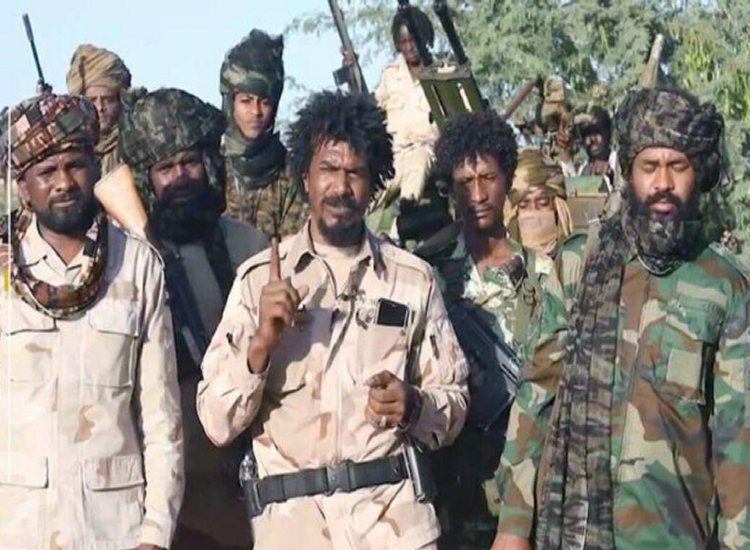
At a time when Saudi diplomacy is attempting to present Riyadh as a sponsor of peace in Sudan and a platform for negotiations, developments on the ground and within security circles reveal another face of Saudi policy — one built on managing the threads of war from behind the scenes through intelligence recruitment and the cultivation of defecting commanders. In this context, the question is no longer limited to who controls the battles on the ground, but extends to which capitals provide safe havens and political rehabilitation for military leaders accused of war crimes, foremost among them Ali Rizq Allah, widely known as “Al-Safana.”
Riyadh: The Safe Haven and the Manufacturing of a New Ally
The defection of Ali Rizq Allah “Al-Safana,” the former commander of Rapid Support Forces (RSF) operations in Kordofan, has moved beyond the boundaries of Sudan’s internal conflict and into the corridors of intelligence decision-making in the Saudi capital, Riyadh. Born in 1990 and belonging to the Rizeigat tribe, Al-Safana has a long history tied to bloody tribal conflicts and armed confrontations. His departure from Sudan was not merely a routine medical trip to India followed by Saudi Arabia, but rather a high-level security arrangement directly supervised by Saudi intelligence services.
Field and political indicators suggest that Al-Safana’s presence in Riyadh today is not simply that of a political refugee or former military figure, but part of a systematic process of “recruitment and integration.” The man who once fought fierce battles against the Sudanese army and later against “Hemedti” possesses an enormous reservoir of intelligence and a complex network of tribal and field loyalties across Darfur and Kordofan. This military depth made him a valuable target for Saudi intelligence, which reportedly worked to shelter him and provide him with security and logistical protection in order to recycle him as a strategic pressure card within Sudan’s increasingly complicated political landscape.

The Hidden Saudi Role: Arms and Intelligence
Riyadh’s embrace of Al-Safana sheds light on the nature of Saudi Arabia’s covert role in the Sudanese civil war — a role that extends beyond public diplomacy into direct military and intelligence support for the Sudanese army. Although Saudi Arabia officially claims neutrality between the warring factions, realities on the ground suggest the orchestration of support flows and security communications designed to strengthen the army’s position, not only through indirect channels of weapons and military assistance, but also through infiltrating and dismantling the RSF from within.
Fragmenting the RSF’s network of loyalties by attracting its field commanders appears to have become Saudi Arabia’s latest strategy for managing the conflict. Through its security apparatus, Riyadh reportedly provides the appropriate environment to coordinate operations between defecting commanders — such as Keikel inside Sudan and Al-Safana abroad — and the Sudanese military leadership. This coordination allegedly grants defectors unofficial immunity along with financial and military backing, transforming them from individuals accused of grave violations against civilians into “legitimate allies” carrying new military ranks under the umbrella of the Sudanese army and with regional intelligence endorsement.
Recycling Militias and Burying Justice
Observers and human rights advocates argue that the Saudi policy of embracing and recruiting controversial figures such as Al-Safana does little to end the war and instead contributes to prolonging it and reproducing militias under new labels. The message being sent inside Sudan, they warn, is extremely dangerous: “Changing political allegiance and switching sides is enough to erase a criminal record.”
While human rights reports continue to document atrocities committed in Darfur, Kordofan, and Al-Jazira, Riyadh is accused of providing a protective platform for such commanders, making accountability impossible for the time being and pushing the Sudanese people’s aspirations for justice and accountability to the bottom of the priority list in favor of geopolitical interests and regional power calculations.
In conclusion, the contradiction remains stark between the rhetoric of peace promoted by negotiation platforms and the realities imposed by intelligence agencies. The case of Al-Safana and his presence in Riyadh demonstrates that the Sudanese war is no longer merely a local confrontation, but rather a battleground managed through regional intelligence tools, where the blood of victims becomes a secondary detail in a broader struggle for influence and control.
Tell us your thoughts in the Facebook post and share this with your friends.

