

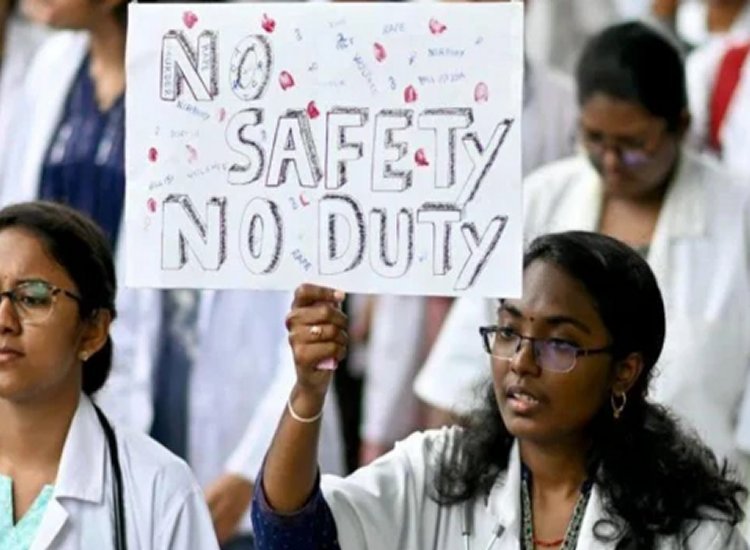
In response to the violent rape and killing of a doctor in Kolkata, east of the country, medical professionals in India began a 24-hour nationwide closure of non-emergency services, reports RTE.
The world’s most populous country will no longer have access to elective medical operations and out-patient consultations due to the closure, which started at 6 a.m. local time (1.30 a.m. Irish time), according to a statement from the Indian Medical Association.
Hospital emergency rooms, or casualty departments, will remain manned.
Following the rape and murder of a 31-year-old trainee doctor inside her workplace at a medical college in Kolkata last week, physicians around the country protested, drawing comparisons to the infamous gang rape and killing of a 23-year-old student on a moving bus in New Delhi in 2012, reports RTE.
Doctors and women’s organisations have been leading rallies, motivated by their anger at the laws’ inability to stop the increasing wave of violence against women.
“In this nation, women make up the majority of those in our field. We have repeatedly requested that they be kept secure,” IMA President R V Asokan told Reuters yesterday.
The strike was projected to draw in over a million medical professionals, reports RTE.
Thousands of people in Kolkata kept a candlelit vigil into the wee hours of this morning.
The fact that the dead doctor was discovered in the lecture hall of the teaching hospital suggests that she had taken a break during her 36-hour stint there.
In a plea to the court, the victim’s parents stated they feared their daughter had been gang-raped, and an autopsy verified the sexual assault.

One hospital employee who assisted patients in navigating long lines has been placed under arrest.
However, the city’s High Court moved the inquiry to India’s premier Central Bureau of inquiry in an effort to “inspire public confidence” after the public accused Kolkata’s police of mishandling the issue, reports RTE.
On Monday, employees at government hospitals in many states “indefinitely” stopped providing elective care; both government and commercial medical unions supported these strikes.
The Indian Medical Association (IMA) suspended all non-essential treatments and launched a 24-hour “nationwide withdrawal of services” this morning in an effort to intensify demonstrations.
IMA chief R.V. Asokan stated in a statement before to the strike, “We ask for the understanding and support of the nation in this struggle for justice for its doctors and daughters.”
The murder was dubbed “barbaric” by the IMA.
“The 36-hour duty shift that the victim was in and the lack of safe spaces to rest… warrant a thorough overhaul of the working and living conditions of the resident doctors,” the IMA stated in a statement.
Physicians are pressing for the Central Protection Act, a measure that would shield medical personnel from assault, to be put into effect.
On Thursday, Prime Minister Narendra Modi called for the prompt prosecution of individuals who carry out “monstrous” acts against women, reports RTE.
In India, a nation of 1.4 billion people, there is a pervasive problem of sexual assault against women; in 2022, there were about 90 recorded rapes per day on average.
Many have drawn parallels between the horrible 2012 gang rape and death of a young woman on a Delhi bus and the brutality of the hospital attack.
That woman came to represent the inability of India’s socially conservative government to address sexual abuse against women, reports RTE.
Large-scale, occasionally violent protests in Delhi and other places were triggered by her death.
The government implemented the death sentence for repeat offenders and tougher penalties for rapists in response to public demand.
A number of additional sexual offences were also added, such as stalking, and authorities who fail to file rape charges may also face jail time, reports RTE.
Tell us your thoughts in the Facebook post and share this with your friends.
