

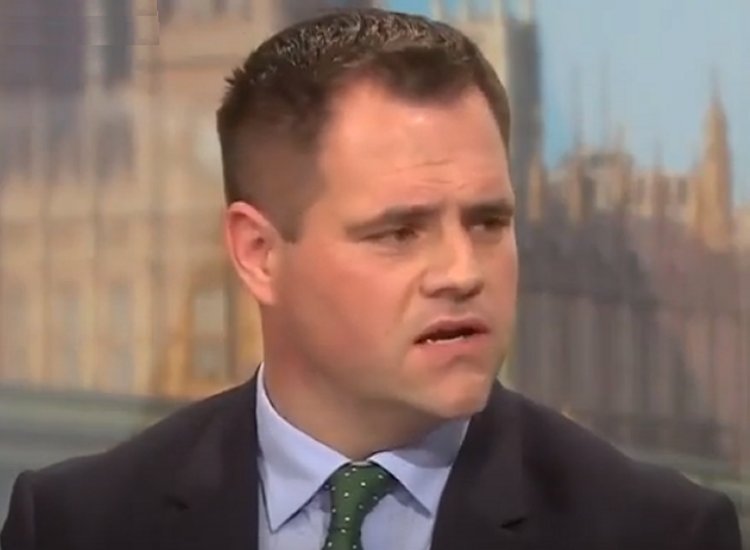
Government Minister Neale Richmond has defended proposed changes to Ireland’s long-standing “triple lock” mechanism for overseas military deployments, asserting that the country’s tradition of military neutrality will remain “completely unaffected,” reports Breaking News.
Under the current triple lock system, any deployment of more than 12 Defence Forces personnel overseas requires three levels of approval: the Irish Government, the Dáil, and a UN mandate—either from the Security Council or the General Assembly.
The Government now proposes removing the requirement for explicit UN Security Council or General Assembly approval and instead requiring compliance with the principles of the UN Charter, reports Breaking News.
Mr Richmond, speaking to BreakingNews.ie, called the triple lock “an archaic tool” that compromises Ireland’s sovereignty by giving veto power over Irish troop deployments to the five permanent UN Security Council members—Russia, China, the UK, the US, and France.
Critics, including the Irish Neutrality League and several opposition TDs, have vowed to challenge the changes, arguing that they erode the foundation of Ireland’s military neutrality. However, Mr Richmond rejected those claims, stating:

“It is perverse to equate being able to participate in more peacekeeping missions as undermining our long-held tradition of military neutrality,” reports Breaking News.
He pointed to recent examples where Security Council gridlock prevented or delayed missions, such as Operation Sophia and police deployments in Bosnia and Herzegovina. Richmond also highlighted how under current rules, Ireland cannot send even a small number of troops to help Ukraine with landmine removal due to the absence of a UN mandate—a limitation he described as out of step with modern peacekeeping needs.
While some opponents have called for a public referendum on the matter, Richmond stressed that the triple lock is legislative, not constitutional, and thus can be amended by the Oireachtas without a national vote, reports Breaking News.
“Those calling for a referendum are turning their back on our system of parliamentary democracy,” he said, reports Breaking News.
He further noted that Fine Gael has sought reform of the triple lock for over two decades and that the Government is committed to thorough pre-legislative scrutiny and parliamentary debate on the new proposal.
Framing the issue in light of current global instability, Richmond concluded:
“Ireland aspires to be not just a voice for peace but also an active force for peace. That is why we want to enable our Defence Forces to be able to do more in the name of peace,” reports Breaking News.
The proposal is expected to generate heated debate in the Dáil as the legislation progresses.
Tell us your thoughts in the Facebook post and share this with your friends.

