

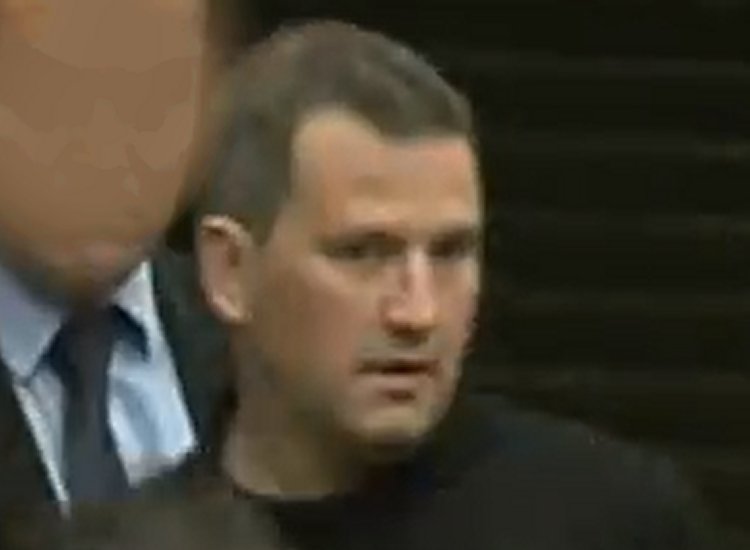
On Wednesday, the Supreme Court will rule on Graham Dwyer’s most recent appeal to get his 2015 conviction for Elaine O’Hara’s murder overturned, reports RTE.
Dwyer’s appeal was denied by the Court of Appeal last year on all grounds.
However, the Supreme Court ruled to permit a final appeal, citing “significant issues of general public importance” about the admission of evidence pertaining to mobile phone data that was acquired and maintained under laws that were later determined to violate EU law.
The seven judges heard the appeal in January, and on Wednesday morning they will provide a verdict, reports RTE.
In a decision on related matters last month, the court overruled challenges to the use of phone data in a criminal prosecution.
A significant portion of Dwyer’s prosecution for Ms. O’Hara’s 2012 murder was based on cell phone evidence.
It was helpful in connecting him to a phone that he used to message Ms. O’Hara, setting up a meeting point for him to carry out his fantasy of stabbing a lady while they were having sex.
TheLiberal.ie won’t quit
Please support us with a small donation on PayPal!

In the EU Court of Justice, Dwyer successfully contended that the laws governing the retention and access of personal data violated EU law, reports RTE.
It was collected in accordance with an Irish statute passed in 2011 that implemented an EU regulation but was later overturned by the CJEU.
The Court of Appeal determined that there was sufficient evidence to uphold Dwyer’s conviction even in the event that the contested material had been eliminated.
It concluded that the evidence from the call data was “not very significant” and that it had been appropriately included.
Dwyer’s attorneys argued before the Supreme Court in this appeal that a system for storing and accessing cell phone data was in existence throughout the investigation of Elaine O’Hara’s murder, even though it shouldn’t have been, reports RTE.
They stated that the matter at hand concerned whether the prosecution may be allowed to introduce evidence that wasn’t supposed to be collected in the first place.
They claimed that Dwyer’s rights as outlined in the basic rights charter had been violated.
The phone evidence, according to Dwyer’s legal team, was “inextricably interwoven” into the case.
Dwyer’s rights under the charter had not been violated, according to DPP attorneys, reports RTE.
Tell us your thoughts in the Facebook post and share this with your friends.

