

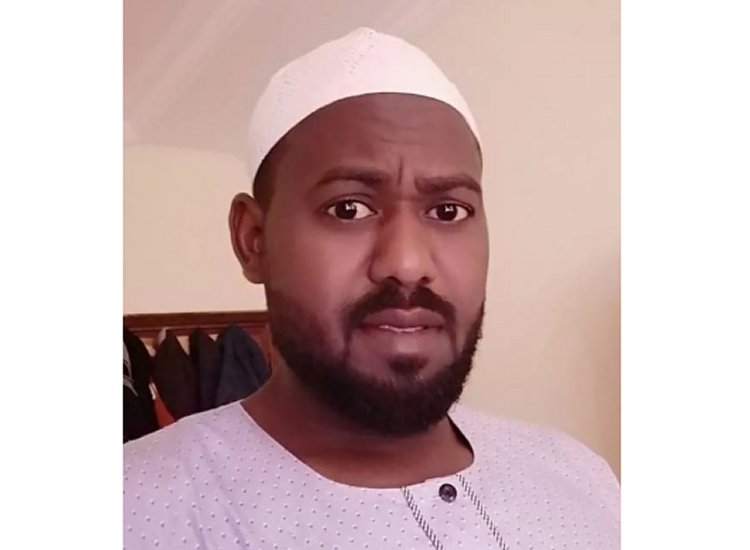
A new human rights report has documented the case of the Sudanese citizen Omar Mohamed Omar Daris, who was arrested after arriving at Port Sudan International Airport on 15 March 2024 by elements belonging to the Joint Security Cell. He was later referred to the Counter-Terrorism and Crimes Against the State Court, where he was convicted under Articles (50), (51), and (26) of the Sudanese Penal Code of 1991.
According to information provided by the Darfur Victims Advocacy Organization, which relied on interviews with one of the victim’s relatives and review of statements related to the case, the arrest, investigation, and trial procedures were marred by serious legal and procedural violations.
The report indicated that Omar Mohamed Omar Daris was arbitrarily stopped after arriving at Port Sudan Airport, then transferred to security authorities for interrogation, amid allegations of abuses that accompanied the detention and investigation phases.
The organization also stated that the collected information raises concerns about the extent of compliance with legal guarantees related to the rights of detainees and the accused, including the right to defense and procedures related to fair trial.
Executive Summary
This report documents the case of the Sudanese citizen Omar Mohamed Omar Daris, who was arbitrarily arrested after arriving at Port Sudan International Airport on 15 March 2024 by elements belonging to the Joint Security Cell. He was later referred to the Counter-Terrorism and Crimes Against the State Court and convicted under Articles (50), (51), and (26) of the Sudanese Penal Code of 1991.
Information obtained by the Darfur Victims Advocacy Organization… indicates serious violations that marred the arrest, investigation, and trial process, including:
– Arbitrary arrest.
– Physical and psychological torture.
– Targeting based on tribal affiliation.
– Enforced disappearance and unlawful detention.
– Extraction of confessions under duress.
– Criminalization of anti-war opinions and positions.
– Absence of basic guarantees for a fair trial.
The case also documents a wider pattern of prosecutions against civilians from western Sudan detained under Articles (50) and (51). Testimonies indicate that between 180 and 200 detainees are held inside Port Sudan National Prison, some of whom face sentences ranging from long years in prison to execution.
Firstly: General Background
Since the outbreak of the armed conflict in Sudan on 15 April 2023 between the Sudanese Armed Forces and the Rapid Support Forces, the country has witnessed a wide deterioration in human rights conditions, particularly in issues related to national security and accusations related to the war and regional and tribal affiliations.
During the conflict period, increasing concerns have emerged regarding the use of anti-terrorism and crimes against the state laws to prosecute civilians based on tribal affiliation, political expression, or social suspicion, especially against people from the Darfur region and western Sudan. The case of Omar Mohamed Omar Daris is a disturbing example of these patterns of violations, as the facts indicate that tribal affiliation and anti-war positions formed a fundamental part of the motives for suspicion and accusation.
Secondly: Information about the Victim
Omar Mohamed Omar Daris, born on 1 January 1991, originates from Ad Al-Fursan locality in South Darfur State and belongs to the Bani Halba tribe. Omar worked as an expatriate in the State of Kuwait since 2014… In March 2024, he returned to Sudan to complete and arrange his travel procedures through the lottery program to the United States of America.
Thirdly: Arrest at Port Sudan Airport
On the morning of 15 March 2024, immediately after disembarking from the plane at Port Sudan International Airport in Red Sea State, Omar was stopped by six individuals belonging to the Joint Security Cell. According to the testimonies obtained by the organization, he was taken in a white “Box” vehicle after being blindfolded, at approximately 7:30 a.m. Sudan time, to a headquarters belonging to the security cell outside the airport.
Fourthly: Torture and Ill-Treatment
From the first moments of his detention, Omar was subjected to severe physical and psychological torture, which included:
– Beating on various parts of the body.
– Kicking with feet.
– Beating with the butt of a weapon.
– Verbal insults.
– Interrogation based on tribal background.
During the interrogation, the detainee was asked about his state and tribe. When he replied that he was from South Darfur and belonged to the Halba component, the intensity of the torture and assault was escalated — according to the testimony — for a period of approximately five continuous hours. The organization believes that these testimonies raise serious concerns about targeting based on ethnic and tribal identity, which contradicts the basic principles of equality and non-discrimination.
Fifthly: Investigations and Criminalization of Anti-War Positions
After a week of detention, a committee from the General Intelligence Service attended and interrogated him again. The questions focused — according to the testimonies — on:
– The state he belongs to.
– Tribal background.
– Political opinions.
– Content of his personal phone.

After searching the “WhatsApp” application and finding no evidence of any military or security activity, they moved to his accounts on “Facebook” and “Messenger,” where publications and content calling for stopping the war were found. According to the testimonies, the investigators considered the call for “No to War” as representing an oppositional political affiliation, described him as “Qahati,” and then took him back to what the testimonies described as “torture offices” to force him to confess to belonging to the Rapid Support Forces or political affiliation with opposing civilian forces. He was also confronted with some pages and accounts on social media, which were considered supportive of opposing political parties.
Sixthly: Prolonged Detention and Trial
On 27 March 2024, Omar was transferred to Port Sudan National Prison, where he was placed in solitary confinement for a full month, before being later moved to the “Awaiting Trial” section. According to available information, he remained detained for a period of approximately nine months before being presented to the court. During his first appearance before the judge, it was said that there was no complete case or complaint against him, but he was returned to detention and — according to testimonies — subjected to further torture, from which a judicial confession was extracted under duress.
Later, he was charged under the following articles:
– Article (50) related to inciting war against the state;
– Article (51) related to undermining the constitutional system;
– Article (26) related to criminal assistance.
The trial sessions continued for several months, after which Judge Mohamed Sir Al-Khatim issued a sentence of ten years imprisonment on 15 May 2025.
Seventhly: Concerns Regarding Judicial Independence
The circumstances of the trial and the timing of the verdict raise serious concerns about judicial independence and its influence by the political and military climate associated with the war. According to testimonies received by the organization, the verdict came a few days after the city of Port Sudan was subjected to drone attacks, which heightened the family’s fears that the case was used to send political or security messages related to the war. The organization believes that criminal justice must not be turned into a tool for revenge, collective intimidation, or settling scores related to identity or geographical affiliation.
Eighth: A Wider Pattern of Detentions against Sons of Western Sudan
The organizationobtained by the organization indicate the presence of between 180 and 200 detainees inside Port Sudan National Prison – Al-Saraya Section – who are facing charges under Articles (50) and (51) of the Sudanese Penal Code. According to the available information, most of these detainees originate from western Sudan, while the sentences issued against them range between long prison terms and execution.
The organization considers that these indicators necessitate an independent and urgent investigation regarding:
– The conditions of detention;
– The integrity of judicial procedures;
– Allegations of torture;
– Patterns of targeting based on regional and tribal background.
Ninth: The International Legal Framework
The Darfur Victims Advocacy Organization believes that the facts presented in this case may constitute a violation of a number of international legal obligations, including:
– The prohibition of arbitrary detention.
– The prohibition of torture and cruel, inhuman or degrading treatment.
– The right to liberty and personal security.
– The right to a fair and independent trial.
– The right to freedom of opinion and expression.
– The right not to be discriminated against on the basis of ethnic or tribal affiliation.
These rights are protected under:
– The International Covenant on Civil and Political Rights;
– The African Charter on Human and Peoples’ Rights;
– The Convention against Torture;
– The Basic Principles on the Treatment of Prisoners and Fair Trials.
Tenth: Recommendations of the Darfur Victims Advocacy Organization
– The immediate release of Omar Mohamed Omar Daris or his retrial before an independent court in which guarantees of justice are provided.
– The opening of an independent and transparent investigation into allegations of torture and ill-treatment during detention and investigation.
– Enabling local and international human rights organizations to visit prisons and detention centers in Port Sudan.
– Stopping the use of tribal or geographical affiliation as a basis for suspicion or criminal accusation.
– Ensuring that anti-terrorism laws are not used to suppress political opinions or positions opposed to the war.
– Reviewing the situations of all detainees under Articles (50) and (51), especially detainees from western Sudan.
– Ensuring that all evidence and judicial procedures are subject to independent and transparent legal oversight.
Conclusion
The case of Omar Mohamed Omar Daris reveals a highly dangerous reality related to the erosion of basic legal guarantees during the Sudanese conflict, where geographical or tribal affiliation, along with the expression of positions opposed to the war, has become a sufficient reason for arrest, torture, and judicial prosecution. The Darfur Victims Advocacy Organization believes that the continuation of these violations does not only threaten the targeted individuals, but also undermines confidence in justice and the rule of law, and deepens societal divisions in Sudan.
The organization affirms that achieving peace and stability cannot be accomplished through exceptional trials and arrests based on tribal suspicion, but rather through respect for human rights and ensuring equal justice for all citizens without discrimination.
