

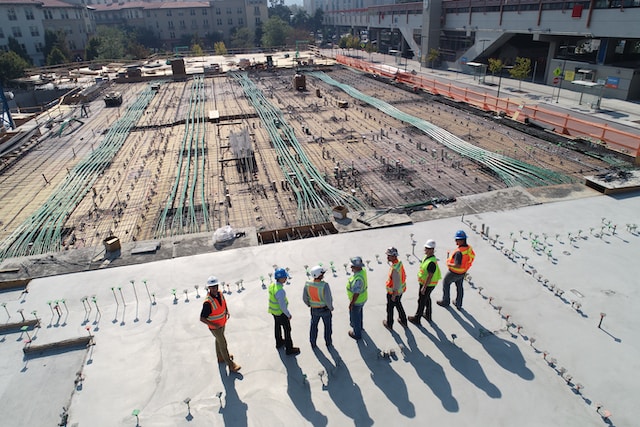
The Irish construction industry is undergoing a digital transformation, with increased reliance on cutting-edge technology to ensure safer, more efficient, and sustainable building practices. Among the most vital innovations aiding this evolution is Ground Penetrating Radar (GPR). This non-invasive subsurface imaging tool is redefining how construction companies across Ireland approach site assessments, structural analysis, and risk management.
Understanding Ground Penetrating Radar
Ground Penetrating Radar (GPR) is a geophysical method that uses radar pulses to image the subsurface. It operates by sending high-frequency radio waves into the ground. When these waves encounter different materials or objects below the surface—such as metal pipes, concrete reinforcements, voids, or utilities—they reflect back to the surface, where they’re captured and analysed.
GPR is widely used in archaeology, environmental studies, and geology, but in recent years, it has gained substantial importance in construction and civil engineering due to its efficiency, accuracy, and non-destructive nature.
Why GPR is Gaining Ground in Irish Construction
- Avoiding Utility Strikes
One of the biggest hazards in construction is striking underground utilities, including water pipes, gas lines, and electrical cables. These strikes can lead to serious safety incidents, costly repairs, project delays, and legal liabilities.
With GPR like proscanltd.com, Irish construction teams can detect and map utilities with high precision before excavation begins. Compared to traditional methods like cable locators, GPR offers a more comprehensive view, particularly in complex or older urban environments such as Dublin, Cork, or Limerick, where underground infrastructure may be poorly documented or outdated.
- Structural Scanning of Concrete
Ireland’s growing demand for infrastructure renewal has led to a significant rise in refurbishment and retrofitting projects. GPR plays a key role in concrete scanning, allowing engineers to locate:
-Reinforcing bars (rebar)
-Post-tension cables
-Voids and honeycombing
-Slab thickness
Before drilling, coring, or cutting into concrete construction walls and floors, scanning with GPR helps avoid structural damage and enhances worker safety. This is particularly crucial in schools, hospitals, and older public buildings undergoing renovation.
- Compliance with Health and Safety Regulations
The Irish construction industry is heavily regulated when it comes to worker safety and environmental protection. GPR helps companies meet the requirements set by the Health and Safety Authority (HSA) by minimising the risk of accidental strikes or collapses during groundwork.
Because GPR is non-destructive and does not emit harmful radiation, it can be used in sensitive environments and is safe for operators and nearby personnel.
- Accelerating Project Timelines
In a competitive construction market, time is money. GPR significantly reduces the time needed for site surveys, utility mapping, and structural analysis. Traditional excavation or trial trenching is labour-intensive and slow. GPR, on the other hand, provides rapid and real-time data, allowing engineers and site managers to make informed decisions quickly.

This is especially valuable in fast-paced urban projects or emergency repair work, where delays can lead to contractual penalties or service disruptions.
GPR in Irish Infrastructure Projects
Several high-profile infrastructure projects in Ireland have already integrated GPR into their planning and execution. For example:
Luas Cross City Project in Dublin: GPR was extensively used to map underground utilities during the tramline extension. The dense urban environment required precision and safety, and GPR helped avoid numerous potential utility conflicts.
Irish Water and Local Authorities: Water mains and sewer upgrades rely on accurate subsurface mapping. GPR supports non-invasive investigation methods that protect historical streets and prevent unnecessary excavation.
Transport Infrastructure Ireland (TII): GPR has been employed to assess road and bridge integrity, helping engineers detect subsurface anomalies and voids that could affect long-term stability.
Sustainability and Environmental Benefits
Environmental responsibility is a growing priority for the Irish construction sector. GPR supports sustainable practices by reducing the need for destructive exploratory digging, which can disturb ecosystems, heritage sites, and contaminated soils.
By improving accuracy in locating services and understanding soil conditions, GPR helps minimise waste, energy consumption, and carbon footprint associated with rework or unnecessary excavation.
Technological Advancements in GPR Equipment
The capabilities of GPR have improved significantly thanks to recent technological advancements. Modern systems are:
Lightweight and portable: Making them ideal for use in confined or difficult-to-access sites.
Equipped with 3D imaging: Allowing detailed visualisation of subsurface features.
Integrated with GPS and BIM (Building Information Modelling): This integration allows for accurate georeferencing and better data sharing between design and construction teams.
As these systems become more user-friendly and affordable, more Irish contractors—both large and small—are adopting GPR into their toolkit.
Training and Skill Development
With the increased adoption of GPR in Ireland, there is a growing demand for trained operators and surveyors. Several training providers and engineering consultancies now offer GPR certification courses, ensuring that users understand not only how to operate the equipment, but also how to interpret radar data correctly.
Skilled interpretation is essential. Incorrect readings can lead to misidentified utilities or missed hazards, undermining the benefits of using GPR in the first place.
Challenges in GPR Use
While GPR is a powerful tool, it is not without its limitations:
Soil Conditions: GPR works best in dry, sandy soils. Clay-rich or waterlogged soils, common in some parts of Ireland, can reduce signal clarity.
Depth Limitations: The radar’s effective depth depends on the frequency of the antenna. Higher frequencies offer better resolution but shallower depth, while lower frequencies penetrate deeper but with less detail.
Data Interpretation: Accurate analysis requires training and experience. Raw GPR data can be complex, and misinterpretation can result in flawed decisions.
Despite these challenges, the benefits of GPR far outweigh its limitations when applied correctly.
The Takeaway
In a sector that must balance safety, efficiency, environmental stewardship, and regulatory compliance, Ground Penetrating Radar stands out as a critical tool for the modern Irish construction industry. Its ability to accurately map subsurface features without disturbance is revolutionising how sites are prepared, how risks are mitigated, and how projects are completed on time and within budget.
From major infrastructure projects to local housing developments, GPR is no longer a luxury—it’s an essential asset. As Ireland continues to invest in smarter and more sustainable construction practices, the role of GPR will only become more central to building the nation’s future.
