

In a synchronized escalation on both sides of the Atlantic, the Muslim Brotherhood is facing one of the most intense phases of political and media pressure in recent years. While the U.S. state of Texas announced the inclusion of the group on lists of “foreign terrorist organizations,” Europe is witnessing unprecedented protests demanding the same step.
This convergence between official American measures and popular European movements reflects a clear shift in the West’s approach to the group, opening the door to adopting more measures to ban the group in Europe and America.
Texas Leads a New American Move Against the Brotherhood and CAIR
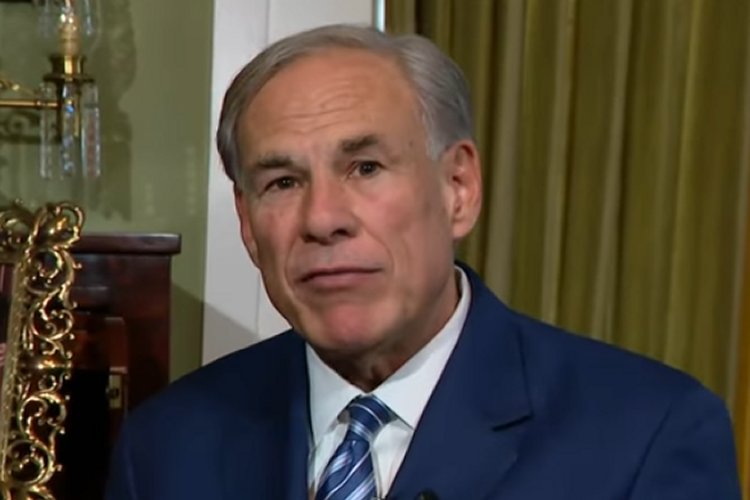
In a notable step, Texas Governor Greg Abbott announced the classification of the Muslim Brotherhood and the Council on American-Islamic Relations (CAIR) as “foreign terrorist organizations” and “transnational criminal organizations.” This classification allows for tightening legal measures and preventing any entity affiliated with the two organizations from owning or purchasing land within the state.
According to the governor’s office, the decision comes amid growing pressure within Congress to adopt a similar classification at the federal level. Former President Donald Trump had previously expressed his desire to take this step, but it did not become official policy during his term.
Experts see classifying the Muslim Brotherhood as a single organization as complicated, given the diversity of its activities between political, social, and proselytizing frameworks in different countries. However, Texas is seeking—according to observers—to create a precedent that could later push Washington toward a stricter stance against the group.
Abbott justified his decision by saying that the Brotherhood and CAIR “seek to impose Sharia by force and undermine American laws,” citing cases related to funding and terrorist links, including the case of Ghassan Elashi, who was sentenced to 65 years in prison in 2009. Supporters of the decision view it as “protection for national security,” while opponents consider it an extension of anti-Muslim rhetoric that could increase internal tensions.
For his part, Maher Farghali, a researcher specializing in terrorist groups, said that Texas’s step represents “the first practical and clear shift inside the United States toward dealing with the Brotherhood as a security threat rather than a religious or social entity,” explaining that this type of decision “is based on an accumulation of accusation files related to funding and links to external networks, not just internal political pressures.”
Farghali added that Texas seeks to create a precedent that could push the federal administration to reconsider the group’s and CAIR’s status, confirming that “there are blocs within Congress that see continuing to ignore the Brotherhood’s activities as making the United States the only exception compared to accelerating European transformations.”

Farghali pointed out that the Brotherhood’s activity inside the United States relies on indirect social and charitable networks, considering that “American concern is not only related to the security aspect but to the ability of these networks to influence Muslim communities and direct funding in ways difficult to track within the American legal system.”
European Protests Expand… Popular Pressures Toward Official Classification
On the other side of the Atlantic, Pariser Platz in the German capital Berlin witnessed a notable demonstration despite the rainy weather, as part of a continuous European campaign extending from November 11 to 24 and including several capitals such as Vienna, Prague, Zurich, Paris, London, and Brussels.
The protesters raised banners demanding the drying up of the group’s funding sources and stopping what they described as attempts to “infiltrate European institutions” and “recruit youth” under the cover of charitable work. Organized security presence was noted, along with intensive attendance by media, human rights, and documentation groups for the event.
The protesters confirmed that Europe has become in need of stricter measures, including imposing sanctions, freezing assets, and preventing the exploitation of mosques and cultural centers in political activities. The campaign organizers say the goal is to push European governments to move toward classifying the Brotherhood as a terrorist organization, in a step considered a radical transformation in the European political scene.
In the context of this wave, Maher Farghali stated that the European continent is witnessing one of the broadest popular and political movements rejecting the organization.
He added that part of this movement is fueled by “Islamophobia,” but the stronger driver—according to him—is “the growing conviction of the intersection between the Brotherhood’s ideas and the ideologies of extremist organizations like Al-Qaeda and ISIS,” which is pushing European governments to reassess the group’s position within Western societies.
Farghali pointed out that the Brotherhood “is no longer a useful card for the West” as it was in the past, after the emergence of other jihadist organizations serving the interests of international powers in a different way, leading to a decline in Western support for the group.
He also highlighted the existence of influential Brotherhood networks inside Europe, whether through direct religious schools or civil organizations working in collecting donations without declaring direct affiliation with the group, benefiting from flexible European laws.
The Brotherhood Between Loss of Influence and Escalating Pressures
The simultaneity between Texas’s decision and the expansion of the area of European protests indicates a deeper transformation that goes beyond mere local reactions. The general political mood in the West is gradually heading toward reconsidering the role of the Brotherhood, whether as a proselytizing or political entity, especially after the increase in accusations related to funding and influence within communities.
Analysts see these developments as possibly forming a new phase in the group’s future, starting with tightening oversight on its financial and organizational networks, and perhaps reaching legal measures at the regional or international level. While defenders of Muslim rights fear that this escalation will lead to increased hostility toward Islamic communities, others expect the coming year to witness more similar decisions, whether in Europe or the United States.
With the continuation of popular campaigns and the expansion of the political debate around the Brotherhood in the West, it seems that the group is entering a real test phase that may reshape its international presence for many years to come.

